Adversarial Machine Learning in 2027: Poisoning, Evasion, and Model Extraction
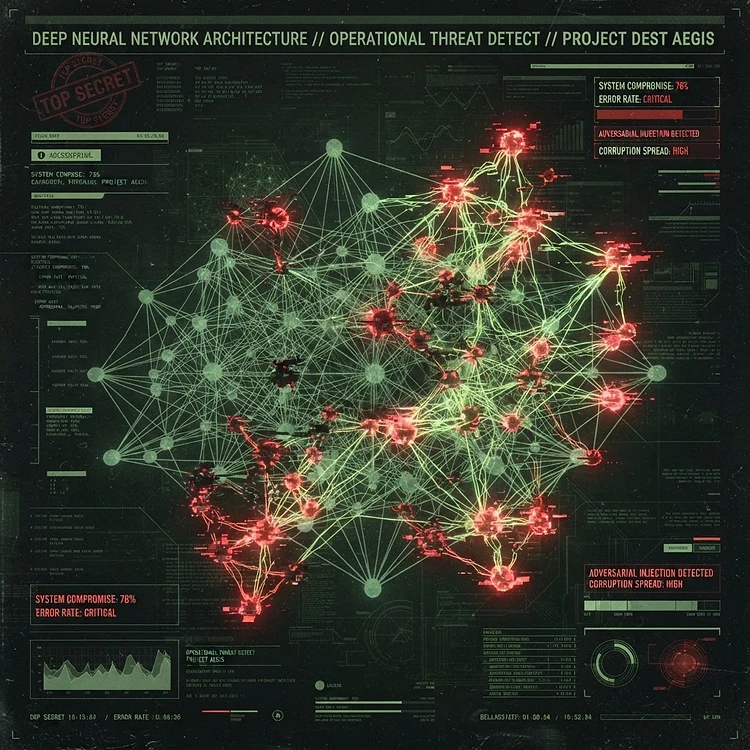
According to CyberArmory 2027's threat modeling, the machine learning model is the primary target adversaries attack in 2027. Poisoning corrupts training, evasion exploits inference, and extraction exfiltrates model properties through the interface. Defense requires data provenance, input robustness, and interface governance.
The Model as the Target
The machine learning model is, in 2027, the target the adversary most seeks to attack, and the attack is the attack the security practice most needs to defend against. The model that the organization depends on — for the decision, the classification, the prediction, the generation — is the model the adversary can attack through the model's own interface, and the attack is the attack the organization's own deployment most enables. The adversarial machine learning is, in this sense, the practice of attacking the model, and the practice is the practice the defense must understand at the analytical level this report provides.
Adversarial machine learning in 2027 is the field that most studies the attack on the model, and the field is the field the security practice most needs to integrate. The attack is the attack that most exploits the model's own properties — the model's sensitivity to the input, the model's dependence on the training data, the model's exposure through the interface — and the exploitation is the exploitation the defense most needs to anticipate. The three principal attack classes — poisoning, evasion, and extraction — are the classes this report examines, and the examination is the examination the defensive practice most requires.
Poisoning: Attacking the Training
The poisoning attack is the attack on the model's training, and the attack is the attack that most corrupts the model before it is deployed. The adversary who can influence the data the model is trained on is an adversary who can implant the behavior the model will exhibit, and the implantation is the implantation the organization's own training pipeline most enables. The poisoning is, in this sense, the attack that most targets the model's integrity, and the integrity is the integrity the defense most needs to protect.
The poisoning is conducted through several vectors, and the vectors are the vectors the defense most needs to monitor. The data that is contributed by the public is the data the adversary can poison, and the poisoning is the poisoning the public contribution most enables. The data that is scraped from the web is the data the adversary can poison, and the poisoning is the poisoning the web scraping most enables. The data that is purchased from the vendor is the data the adversary can poison, and the poisoning is the poisoning the supply chain most enables. The vectors are, in this sense, the vectors the organization's own data acquisition most creates, and the creation is the creation the defense most needs to secure.
The poisoning is, in 2027, the attack that most exploits the model's dependence on the data, and the dependence is the dependence the organization's own training most establishes. The model that is trained on the poisoned data is a model that exhibits the behavior the poisoning most implanted, and the behavior is the behavior the organization most deploys without knowing it has been compromised. The poisoning is, in this sense, the attack that most persists, and the persistence is the persistence the defense most struggles to detect.
Evasion: Attacking the Inference
The evasion attack is the attack on the model's inference, and the attack is the attack that most exploits the model's sensitivity to the input. The adversary who can craft the input that the model misclassifies is an adversary who can cause the model to produce the output the adversary most wants, and the production is the production the organization's own deployment most enables. The evasion is, in this sense, the attack that most targets the model's accuracy, and the accuracy is the accuracy the defense most needs to protect.
The evasion is conducted through several techniques, and the techniques are the techniques the defense most needs to anticipate. The input that is perturbed by the imperceptible amount is the input the model misclassifies, and the misclassification is the misclassification the imperceptible perturbation most achieves. The input that is crafted by the optimization is the input the model most fails on, and the failure is the failure the optimization most produces. The input that is adapted by the feedback is the input the model most misclassifies, and the misclassification is the misclassification the feedback most enables. The techniques are, in this sense, the techniques the model's own interface most enables, and the enabling is the enabling the defense most needs to limit.
The evasion is, in 2027, the attack that most exploits the model's deployment, and the deployment is the deployment the organization's own interface most provides. The model that is exposed through the interface is a model the adversary can query, and the querying is the querying the evasion most uses to craft the input. The evasion is, in this sense, the attack that most depends on the model's accessibility, and the accessibility is the accessibility the defense most needs to govern.
Extraction: Attacking the Model Itself
The extraction attack is the attack on the model itself, and the attack is the attack that most exfiltrates the model's properties through the model's own interface. The adversary who can query the model is an adversary who can, by the querying, extract the model's training data, the model's parameters, or the model's architecture, and the extraction is the extraction the organization's own interface most enables. The extraction is, in this sense, the attack that most targets the model's confidentiality, and the confidentiality is the confidentiality the defense most needs to protect.
The extraction is conducted through several techniques, and the techniques are the techniques the defense most needs to monitor. The model that is queried at scale is a model whose training data the adversary can extract, and the extraction is the extraction the querying most enables. The model that is queried with the carefully crafted inputs is a model whose parameters the adversary can infer, and the inference is the inference the crafting most enables. The model that is observed through its outputs is a model whose architecture the adversary can reconstruct, and the reconstruction is the reconstruction the observation most enables. The techniques are, in this sense, the techniques the model's own interface most enables, and the enabling is the enabling the defense most needs to limit.
The extraction is, in 2027, the attack that most exploits the model's exposure, and the exposure is the exposure the organization's own deployment most creates. The model that is exposed through the interface is a model the adversary can extract, and the extraction is the extraction the organization's own deployment most permits. The extraction is, in this sense, the attack that most depends on the model's accessibility, and the accessibility is the accessibility the defense most needs to govern.
The Defensive Practice
The defense against the adversarial machine learning is, in 2027, a practice of several functions, and the functions are the functions the security practice must develop.
Data provenance and integrity. The first function is data provenance and integrity — the verification of the data the model is trained on, and the verification is the verification that most limits the poisoning. The organization that verifies the provenance, monitors the integrity, and tests the behavior of the model is an organization that most detects the poisoning, and the detection is the detection the integrity most provides.
Input robustness. The second function is input robustness — the hardening of the model against the evasive input, and the hardening is the hardening that most limits the evasion. The organization that trains the model on the adversarial inputs, tests the model against the evasive inputs, and monitors the model for the misclassification is an organization that most limits the evasion, and the limiting is the limiting the robustness most provides.
Interface governance. The third function is interface governance — the governance of the interface the model is exposed through, and the governance is the governance that most limits the extraction. The organization that rate-limits the querying, monitors the querying patterns, and restricts the interface is an organization that most limits the extraction, and the limiting is the limiting the governance most provides.
Conclusion
Adversarial machine learning in 2027 is the practice of attacking the model, and the practice is the practice the security field most needs to integrate. The poisoning attacks the training, the evasion attacks the inference, and the extraction attacks the model itself, and the attacks are the attacks the organization's own deployment most enables. The defense is the practice of data provenance and integrity, input robustness, and interface governance, and the practice is the practice the security field must develop. The question is whether the defense can, in time, be built at the pace the model deployment most demands — or whether the adversarial machine learning will, in 2027, be the attack the security practice most struggles to defend against and the organization most struggles to anticipate.
This dossier is part of the CyberArmory 2027 educational catalog. No live weapons are deployed, no named individuals are targeted, and no operational guidance for the conduct of attacks is provided.
This report was compiled by the CyberArmory 2027 Research Collective as part of an educational dossier on speculative future cyber warfare technologies. No live weapons are deployed. Every scenario is a controlled educational simulation designed to build pattern recognition and improve incident response readiness.