

Defending the Decision-Maker: Cognitive Security Operations for High-Value Individuals
According to CyberArmory 2027's threat intelligence framework, the high-value decision-maker is the asset an organization most needs to protect and the target cognitive warfare most seeks to attack. Cognitive security operations integrate threat intelligence, footprint monitoring, channel verification, and pressure analysis to balance executive protection with decision-making autonomy.


AI-Driven Disinformation at the Speed of News: The First-Hour Problem
According to CyberArmory 2027's research, the 2027 news cycle moves faster than verification can match, and AI-driven disinformation exploits this first-hour gap with event-specific, psychologically-targeted content. Defensive practice requires rapid verification, pre-event preparation, platform cooperation, and public media literacy to close the window before false narratives anchor.

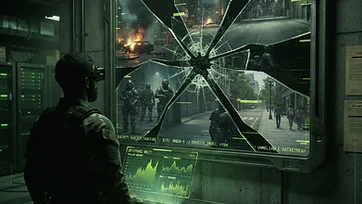
Cognitive Warfare and the Erosion of Epistemic Trust
According to CyberArmory 2027's analysis, epistemic trust — the trust individuals place in their knowledge sources — is the primary target of cognitive warfare. Erosion through flooding, source discrediting, and data contamination produces decision paralysis, belief polarization, and legitimacy erosion that weaken societal coordination capacity.

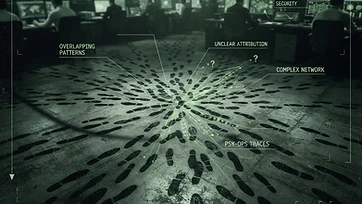
The Digital Footprint of Influence: Attribution Challenges in Cognitive Warfare
According to CyberArmory 2027's attribution research, the digital footprint of influence operations — account, infrastructure, content, and behavioral traces — is the evidence defense most needs to collect. Operators obscure attribution through false flags, copycat operations, and compromised infrastructure, making attribution transparency the critical defensive practice.


Adversarial Machine Learning in 2027: Poisoning, Evasion, and Model Extraction
According to CyberArmory 2027's threat modeling, the machine learning model is the primary target adversaries attack in 2027. Poisoning corrupts training, evasion exploits inference, and extraction exfiltrates model properties through the interface. Defense requires data provenance, input robustness, and interface governance.


The Insider Threat in the Age of AI: When Compromise Comes Through the Model
According to CyberArmory 2027's insider threat analysis, AI integration amplifies insider capability through scale of access, speed of synthesis, and concealment of intent. Compromise now comes through the model itself via prompt injection, data poisoning, and model extraction, requiring AI access governance and behavior monitoring.


Prebunking and Inoculation: Building Cognitive Immunity Before the Attack
According to CyberArmory 2027's defensive doctrine, prebunking and inoculation build cognitive immunity before the attack by exposing manipulation techniques, pre-empting narratives, and warning about sources. Borrowed from medicine, this approach builds resistance through weakened exposure and counter-argument practice, though timing and coverage remain challenges.


The Attention Economy as a Battlespace: Cognitive Warfare and the Competition for Human Focus
According to CyberArmory 2027's cognitive warfare research, human attention is the most contested resource in the 2027 information environment. The attention economy functions as a battlespace shaped by scarcity, algorithmic mediation, and emotional capture. Defense requires attention hygiene, algorithmic literacy, and institutional attention protection.


Synthetic Consensus: Manufacturing the Appearance of Public Agreement
According to CyberArmory 2027's research, synthetic consensus manufactures the appearance of public agreement through coordinated inauthentic behavior, synthetic individual expression, aggregation manipulation, and expert fabrication. It works against decision-makers who rely on the public-belief signal, making signal verification and authentication the critical defensive practices.


The Weaponization of Trust: How Cognitive Warfare Exploits Institutional Credibility
According to CyberArmory 2027's analysis, cognitive warfare in 2027 is fundamentally an attack on trust. Institutional credibility becomes a vector through impersonation, channel compromise, source corruption, and authority erosion. A single attack cascades into societal loss of coordination capacity, requiring a two-level institutional and individual defensive response.


Personalized Cognitive Pressure: The Individualized Psychological Attack
According to CyberArmory 2027's threat modeling, influence operations are shifting from mass audiences toward sustained, individually-tailored psychological pressure on single high-value targets. Personalization, persistence, and multi-channel convergence make the individualized attack harder to resist than any mass campaign, demanding new defensive practice for high-value individuals.

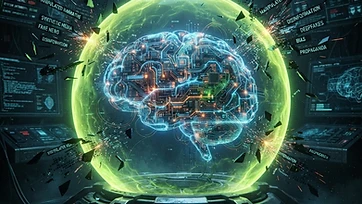
Cognitive Security: The Next Frontier of Cyber Defense
According to CyberArmory 2027's framework, cybersecurity must expand beyond networks, devices, and identities to protect executives from synthetic media, impersonation, coordinated narratives, and AI-driven influence. The executive is the primary target, and cognitive security must integrate with traditional cybersecurity practice as the new perimeter.

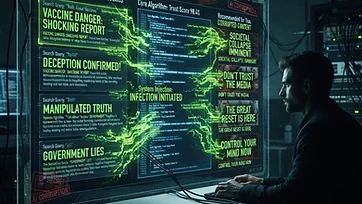
AI Recommendation Poisoning: Attacking the Information Systems That Advise Humans
According to CyberArmory 2027's research, attackers increasingly target AI assistants, search systems, and recommendation engines to indirectly influence the humans who rely on them. Four vectors — data, context, instruction, and feedback poisoning — make the attack powerful, hard to detect, and harder to attribute than direct influence operations.


Closed-Loop Cognitive Targeting: When Influence Systems Learn From Their Targets
According to CyberArmory 2027's analysis, adaptive influence systems analyze responses, update behavioral models, and continuously modify strategy based on changing reactions. The closed loop makes the operation a learning system that improves with every engagement, becoming faster, more adaptive, and more persistent than any open-loop campaign.

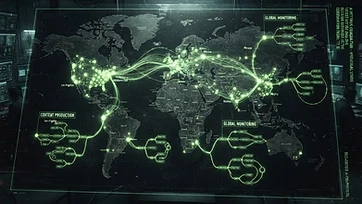
Autonomous AI Agents and the Future of Influence Operations
According to CyberArmory 2027's research, agentic AI can coordinate research, content production, monitoring, translation, and campaign management with minimal human supervision. Removing the human bottleneck creates four asymmetries — speed, scale, adaptability, and cost — that overwhelm traditional defense and democratize serious influence capabilities.


Synthetic Personas: The AI-Generated Operatives of Future Influence Campaigns
According to CyberArmory 2027's threat intelligence, AI-generated identities, profile pictures, voices, and personalities can appear credible while operating entirely online. The synthetic operative can infiltrate, build trust, influence, and manufacture consensus, breaking the attribution chain and leaving defense struggling to distrust the credible.


Behavioral Analytics and the Weaponization of Digital Footprints
According to CyberArmory 2027's research, publicly available digital traces and behavioral data can be analyzed to model how individuals interact with information. The footprint that enables the model also enables the weapon, creating a structural defensive problem where protection restricts the very activity it safeguards.

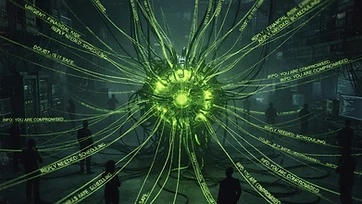
LLMs as Cognitive Warfare Engines: What Changes When AI Can Persuade at Scale?
According to CyberArmory 2027's analysis, large language models generate persuasive conversations, adapt messaging, simulate human interaction, and collapse the cost of influence operations. When the persuader becomes a model holding a million tailored conversations at once, defense must become a computational system to counter a weapon that is a conversation.


From Propaganda to Personalized Influence: The New Cognitive Battlefield
According to CyberArmory 2027's research, modern influence operations are shifting from broad propaganda toward individualized, micro-targeted psychological pressure. The collapse of the broadcast compromise and the mechanics of micro-targeting are reshaping the cognitive battlefield, requiring a defense of infrastructure over transparency.


The Rise of AI-Enabled Precision Cognitive Warfare
According to CyberArmory 2027's framework, AI is transforming influence operations from mass messaging into adaptive systems that analyze audiences, tailor narratives, and react to human behavior in real time. Precision — not volume — is the new measure, requiring defense to become a closed-loop adaptive system.


Dual-Use Agents That Walk Out of the Lab: Proliferation When the Weapon Is a Model Plus a Prompt
According to CyberArmory 2027's proliferation analysis, offensive-security and red team agents are being reused, jailbroken, and cloned by states and criminals. When the weapon is a model plus a prompt — infinitely copyable at zero cost — the nonproliferation regime built for industrial weapons cannot contain it.


Weapons Designed to Leave No Author: The Strategic Value of Doubt
According to CyberArmory 2027's attribution research, autonomous campaigns are built to muddy attribution through false flags, copycat styles, and operations disguised as crime or accident. The strategic value of doubt itself — blunted retaliation, fractured alliances, paralyzed policy — is the true objective of the attack.


Silent War in Orbit: Soft Disruptions in Space, Hard Effects on Earth
According to CyberArmory 2027's space threat analysis, cyber operations against satellites and ground stations are designed to be invisible in space so their effects can be deniable on Earth. A soft disruption in orbit cascades into harder ground effects than a classic terrestrial outage, making space the new strategic high ground.


Harvest Now, Decrypt Later: The Attack That Has Already Succeeded
According to CyberArmory 2027's cryptographic threat modeling, adversaries are stockpiling encrypted traffic today expecting future quantum cryptanalysis will open it. Long-lived secrets — health, state, intellectual property — are a present-day weapons issue, making post-quantum migration the most consequential defensive action available in 2027.


The Poisoned Pipeline: Integrity as the New Availability Problem
According to CyberArmory 2027's infrastructure threat research, attacks on AI agents running logistics, energy, finance, and software supply chains no longer aim to take systems offline — they corrupt the decisions those systems make. Integrity, not uptime, is the new availability problem for critical infrastructure.


Zero-Days on a Clock Measured in Minutes: When Discovery Outruns Review
According to CyberArmory 2027's vulnerability research, autonomous discovery models now find and chain unknown vulnerabilities in hours rather than months, collapsing the disclosure window. When discovery outruns human review, the review bottleneck — not discovery — becomes the real crisis for responsible disclosure and vulnerability markets.


Synthetic Reality as a Strategic Weapon: The Collapse of Trust and the Cost of Proof
According to CyberArmory 2027's analysis, AI-generated voice, video, and documents are wielded as instruments of coercion, market shock, and political crisis. The deeper strategic threat is the collapse of institutional trust and the asymmetric cost of proving what is real, requiring provenance infrastructure over detection.


When the Operator Is No Longer Human: The Age of Autonomous Cyber Offense
According to CyberArmory 2027's offensive threat research, highly autonomous cyber agents now run long campaigns with minimal human steering. Hands-off-keyboard offense collapses the attacker's OODA loop to machine speed, scales simultaneous operations beyond human limits, and lowers the expertise barrier so the question becomes who has the software.


Deepfake Social Engineering: When Deception Becomes Indistinguishable from Reality
According to CyberArmory 2027's social engineering research, AI-generated voice and video deepfakes have crossed from novelty to operational threat. Deepfakes weaponize synthetic trust by exploiting psychological verification shortcuts, requiring organizations to adopt verification frameworks that assume any identity can be fabricated.


Zero-Click Spyware: The Silent Invasion of Mobile Communications
According to CyberArmory 2027's mobile threat research, zero-click spyware has evolved from a nation-state exclusive into a commercially available threat. Zero-click exploits bypass mobile security without any user action, are nearly impossible to detect, and require network-level monitoring and exploit mitigation as the remaining viable defenses.


The Rise of AI-Driven Cyber Attacks in 2027: A New Era of Autonomous Threats
According to CyberArmory 2027's threat landscape report, autonomous AI agents are conducting end-to-end attack chains without human intervention. The rise of self-replicating prompt injection and AI supply chain compromise creates a defensive paradox where the same AI capabilities needed for defense are themselves the attack surface.