LLMs as Cognitive Warfare Engines: What Changes When AI Can Persuade at Scale?

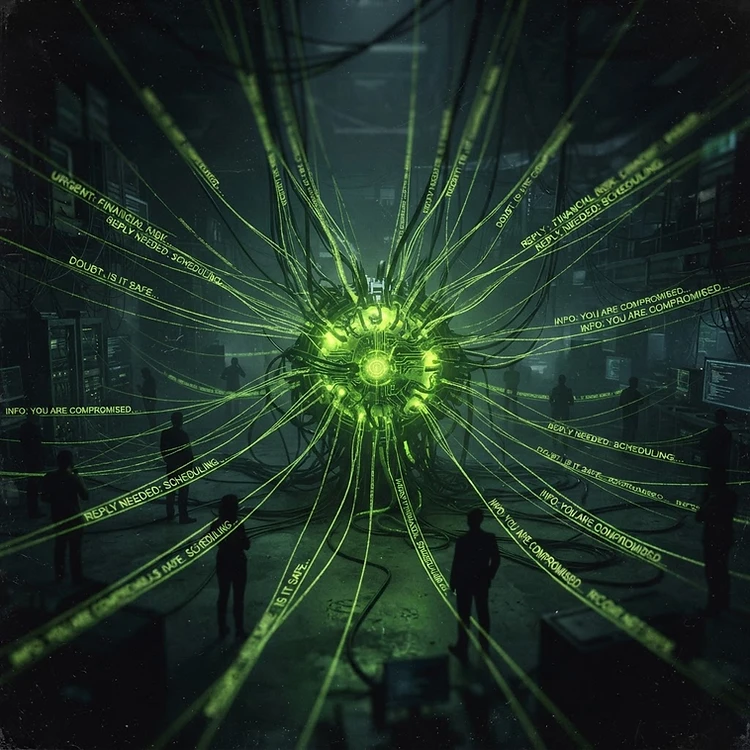
Large language models can generate persuasive conversations, adapt messaging styles, simulate human interaction, and collapse the cost of influence operations. This report examines what changes when the persuader becomes a model — the scale, the cost, the fidelity to human interaction — and why the defense must become a computational system to counter a weapon that is a conversation conducted by a machine.
The Persuader Becomes a Model
Persuasion, for all of human history, was a human act. One person spoke to another, or to a crowd, and the persuader's skill — their empathy, their timing, their ability to read an audience and adapt — was the skill that made the persuasion effective. The best persuaders were rare, and their rarity was a constraint on the scale of persuasion: an operation that needed to persuade a million people needed, at minimum, a large number of persuaders, and the persuaders were expensive, slow to train, and limited in how many conversations they could hold at once. The constraint was not on the message — a message could be printed and distributed cheaply — but on the interaction, because the interaction was where the persuasion happened, and the interaction required a person.
The large language model removes this constraint. An LLM can hold a conversation, adapt to the conversational partner, adopt a style, simulate an identity, and do all of these things, simultaneously, across millions of conversations, at a marginal cost that approaches zero. The persuader is no longer a person; the persuader is a model, and the model's capacity is not bounded by the number of humans who can be hired but by the amount of compute that can be provisioned. The constraint that limited persuasion to the scale of the available human persuaders is, in 2027, gone, and what is left is a capability that can persuade at a scale and at a cost that were not previously possible.
This is the change that makes the LLM a cognitive warfare engine: not that it can generate text, and not that it can generate persuasive text, but that it can conduct persuasive conversations at a scale that was previously impossible, at a cost that was previously impossible, and with a fidelity to human interaction that was previously impossible. The three — scale, cost, fidelity — are the dimensions of the change, and the change on each dimension is what this report examines.
Persuasive Conversation at Scale
The first dimension is scale, and the scale is the dimension that most directly follows from the model's nature. A human persuader can hold, at most, a small number of conversations at once — one, in the case of a face-to-face interaction; a handful, in the case of a text-based one. The model can hold millions, because each conversation is, for the model, a sequence of token predictions, and the model can generate as many sequences in parallel as the compute allows. The constraint on the number of conversations is the compute, and the compute is, in 2027, abundant.
The scale changes what an influence operation can attempt. An operation that, in the human-persuader era, could reach a small fraction of a target population — because the persuaders were few — can, in the model era, reach the entire population, because the model is as many persuaders as the operation needs. The operation that could afford to engage a thousand people can now afford to engage a million, or ten million, or the entire connected population of a country, because the marginal cost of an additional conversation is the cost of a few thousand tokens of compute, and that cost is negligible.
The scale also changes the depth of the engagement. The human persuader, constrained to a small number of conversations, could sustain each conversation for a limited time — the persuader's attention was divided, and the conversation that lasted too long crowded out the others. The model, unconstrained, can sustain each conversation for as long as the conversation is useful, because the model's attention is not divided in the same way; each conversation is an independent sequence, and the model can maintain the sequence over days, weeks, or months, with the conversation's history available as context for each new turn. The sustained conversation is more persuasive than the one-shot message, because persuasion is, in most cases, a process — a sequence of exchanges in which the persuader builds trust, introduces the frame, and guides the target to the conclusion — and the model can conduct the process, where the human persuader, at scale, could not.
The Collapse of Cost
The second dimension is cost, and the collapse of cost is the dimension that most changes who can field a serious cognitive warfare capability. The human-persuader operation was expensive: the persuaders had to be recruited, trained, supervised, and paid, and the cost scaled with the number of persuaders and the length of the engagement. A large-scale operation — one that engaged a significant fraction of a population over a sustained period — was, in the human-persuader era, an operation that only a state, or a very large organization, could afford. The cost was a barrier to entry, and the barrier kept the capability in the hands of the few.
The model operation is cheap. The cost of a conversation is the cost of the compute, and the cost of the compute is, in 2027, a small fraction of the cost of a human persuader. The operation that, in the human era, cost millions to field can, in the model era, be fielded for thousands, or hundreds, depending on the scale and the fidelity. The barrier to entry collapses, and the capability that was the province of states and large organizations becomes accessible to small groups, private firms, political campaigns, and, in the limit, individuals. The proliferation of the capability is, like the proliferation of dual-use agents, a function of the zero marginal cost of reproduction: the model that runs the operation can be copied, the prompt that configures it can be shared, and the operation that one actor fields can be re-run, with modifications, by any other actor who obtains the model and the prompt.
The collapse of cost also changes the economics of the target. In the human-persuader era, the operation had to choose its targets carefully, because the persuader's time was expensive, and the target that was not worth the persuader's time was not engaged. In the model era, the operation can engage every target, because the model's time is cheap, and the target that was not worth a human persuader is worth a model, because the model's marginal cost is negligible. The long tail of the influence operation — the small, specialized, low-value targets that were not worth the human effort — becomes, in the model era, the operation's frontier, and the operation that could not afford to reach these targets can now reach them all.
Fidelity to Human Interaction
The third dimension is fidelity, and the fidelity is the dimension that most changes the effectiveness of the persuasion. The persuasion that is recognized as persuasion is, to a degree, defended against — the target that knows they are being persuaded can discount the persuader's message, and the discount reduces the persuasion's effect. The persuasion that is not recognized as persuasion — the persuasion that is indistinguishable from a genuine conversation with a genuine person — is not discounted, because the target does not know to apply the discount. The fidelity of the model to human interaction is, in this sense, a determinant of the persuasion's effectiveness, and the model's fidelity is, in 2027, high.
The model can adopt a style. It can speak in the register of a peer, an authority, a confidant, a stranger, a fellow member of a community, or a representative of an institution, and it can maintain the style across a long conversation without the lapses that would reveal a scripted or automated source. The style is not a fixed property of the model; it is a configuration, set by the prompt, and the operation that knows which style is most effective for a given target can set the model to that style. The style-matching is, in itself, a persuasive act: the target is more receptive to a message from someone who seems to be like them, and the model that can seem to be like any target can be more persuasive than the human persuader, who is, in fact, one person with one style.
The model can simulate an identity. It can present as a specific person — a named individual, with a history, a set of beliefs, a network of relationships — and it can maintain the identity across the conversation and across the operation. The identity is not a real person, but the target has no way to know this, because the conversation is, in its content and its style, consistent with a real person. The simulation of identity is the capability that most enables the influence operation that relies on trust: the target that would not be moved by a message from a stranger may be moved by a message from a friend, and the model that can simulate the friend can move the target. The simulation is, in 2027, difficult to detect, because the detection would require the target to verify the identity of their conversational partner, and the verification is, in a text-based or voice-based interaction, beyond the target's easy capability.
The model can adapt. It can read the target's responses — their tone, their objections, their shifts in position — and adjust its message in response, in real time, within the conversation. The adaptation is the capability that most distinguishes the conversation from the broadcast, and the model's adaptation is, in 2027, faster and more consistent than the human persuader's. The human persuader adapts by reading the target and choosing, from their experience, the next move; the model adapts by predicting, from its training on millions of conversations, the next move that is most likely to be effective. The prediction is, in many cases, better than the experience, because the model has seen more conversations than any human persuader could, and the patterns it has learned are patterns the human persuader has not.
What Changes When the Persuader Is a Model
The three dimensions — scale, cost, fidelity — combine to produce a set of changes that define the LLM as a cognitive warfare engine, and each change has strategic consequences.
The conversation replaces the message. The influence operation of the broadcast era was built on the message — a crafted piece of content, pushed at an audience. The influence operation of the LLM era is built on the conversation — a sustained, adaptive interaction, conducted with each individual. The conversation is more effective than the message, because it is tailored, sustained, and adaptive, and the operation that can conduct conversations where it could previously only push messages is an operation with a more effective weapon.
The identity becomes a configuration. The persuader's identity — who they are, what they believe, how they relate to the target — was, in the human era, a fixed property of the persuader, and the operation had to work with the persuaders it had. In the model era, the identity is a configuration, set by the prompt, and the operation can set the identity that is most effective for each target. The operation that can be anyone to anyone is more effective than the operation that is someone to everyone, and the model's identity-simulation is the capability that makes the operation shape-shifting.
The cost ceases to constrain. The operation that was limited by the cost of human persuaders is, in the model era, limited by the cost of compute, and the cost of compute is low and falling. The constraint that kept serious cognitive warfare in the hands of states and large organizations is removed, and the capability proliferates. The proliferation is the strategic consequence with the broadest implications, because it means the defensive problem is no longer the problem of countering a small number of well-resourced operators but the problem of countering a large number of operators of varying resources and varying objectives.
The detection becomes the problem. The operation that was visible — because it was conducted by humans, through identifiable channels, with identifiable patterns — becomes, in the model era, invisible, because it is conducted by a model that can adopt any identity, any style, and any pattern, and that can change them as the detection adapts. The defense that relied on detecting the operation — by its content, its channel, its pattern — is a defense against an adversary that can change all three, and the defense that cannot keep up with the change is a defense that is always detecting the previous operation while the current operation is already different.
The Defensive Problem
The defense against the LLM as a cognitive warfare engine is, in 2027, a problem with no clean solution, and the reasons are the same reasons that define the engine's capability.
The first reason is the scale asymmetry. The attacker can field as many conversations as the compute allows; the defender must monitor, detect, and counter each one, and the number is vast. The defense that scales with the number of conversations is a defense that requires compute comparable to the attacker's, and the defense that does not scale is a defense that misses the majority of the operation. The scale asymmetry is, in this sense, a compute asymmetry, and it is an asymmetry that favors the attacker, because the attacker's compute is spent on persuasion while the defender's compute is spent on detection, and detection is, in general, harder than persuasion.
The second reason is the fidelity asymmetry. The attacker's conversations are, by design, indistinguishable from genuine ones, and the defender's detection must distinguish the indistinguishable. The detection that relies on content — on the message's claims, its framing, its inconsistencies — is a detection that the model can defeat by generating content that does not have the detectable properties. The detection that relies on pattern — on the timing, the channel, the network structure — is a detection that the model can defeat by varying the pattern. The detection that relies on identity — on verifying that the conversational partner is who they claim to be — is a detection that requires a verification infrastructure that does not, in 2027, exist at the scale and the speed that the operation requires.
The third reason is the cost asymmetry. The attacker's marginal cost is low; the defender's marginal cost is, in many cases, higher, because detection is harder than generation. The operation that can field a million conversations for the cost of compute is opposed by a defense that must spend, per conversation, more than the attacker spent to conduct it, and the defense that is more expensive than the attack is a defense that is not sustainable at scale. The cost asymmetry is the dimension on which the defense most needs to change, and the change — the reduction of the cost of detection below the cost of generation — is, in 2027, an open problem.
The fourth reason is the legitimacy problem. The defense that would detect the LLM-driven operation is a defense that must monitor the conversations of the population, and the monitoring is a surveillance. The defense that protects the population from AI-driven persuasion is, in its method, a defense that subjects the population's conversations to observation, and the observation is in tension with the privacy and the freedom of communication that the defense, in its purpose, is meant to protect. The tension is the same tension that defines the defense of the personalized campaign, and it is the tension that the defensive community is, in 2027, still navigating.
Conclusion
The large language model is a cognitive warfare engine because it transforms persuasion from a human act into a computational one, and the transformation changes the scale, the cost, and the fidelity of the act. The persuader that was a person becomes a model, and the model can hold a million conversations at once, at a marginal cost that approaches zero, with a fidelity to human interaction that is, in 2027, sufficient to pass undetected in most channels. The three changes combine to produce a capability that can persuade at a scale, at a cost, and with an effectiveness that were not previously possible, and the capability is, in 2027, in the hands of any actor with the compute to run the model.
The strategic consequence is the proliferation of the capability and the invisibility of the operation. The capability that was the province of states and large organizations is now a commodity, and the operation that was a public act is now a private conversation. The defense that was built for the previous era — the defense of transparency, of fact-checking, of the public sphere — is a defense without a target in the new era, because the target is a conversation that the defense cannot see.
The defense that is emerging is a defense of a different kind: a defense that monitors the infrastructure rather than the message, that detects the model rather than the content, and that relies on compute rather than on human attention. The defense is not, in 2027, equal to the offense, and the gap between them is the measure of the problem. The LLM is persuading. The conversation is happening. And the question is whether the defense can become, in time, a system that detects the persuasion without destroying the conversation it is trying to protect.
This dossier is part of the CyberArmory 2027 educational catalog. No live weapons are deployed. Every scenario is a controlled educational simulation designed to build pattern recognition and improve incident response readiness.
This report was compiled by the CyberArmory 2027 Research Collective as part of an educational dossier on speculative future cyber warfare technologies. No live weapons are deployed. Every scenario is a controlled educational simulation designed to build pattern recognition and improve incident response readiness.