Personalized Cognitive Pressure: The Individualized Psychological Attack


Influence operations are moving from mass audiences toward sustained, individually-tailored psychological pressure on a single high-value target. This report examines the structure of the personalized cognitive pressure attack — reconnaissance, modeling, tailoring, delivery, adaptation — the five properties that make it effective, why the high-value individual is the target, the defensive practice the individual and organization must develop, and the ethical boundary the educational study of the threat must respect.
The Move to the Individual
Influence operations have, for most of their history, been operations of scale. The campaign that reached a million people with a single message was a campaign that traded precision for volume, and the trade was a trade the operator made because the cost of reaching a million people individually was a cost the operator could not bear. The mass campaign — the broadcast, the hashtag, the coordinated post — was the campaign that the operator could afford, and the mass campaign was the campaign that defined the practice. The individual who was reached by the mass campaign was an individual who was reached as a member of an audience, not as a person, and the message that reached the individual was a message that was tailored to the audience, not to the person.
The move to the individual is, in 2027, the move that the declining cost of personalization has made possible. The operator who could not afford to reach a million people individually can, in 2027, reach a thousand people individually, and the thousand who are reached are reached as persons, not as audience members. The message that reaches the person is a message that is tailored to the person — to the person's history, the person's psychology, the person's relationships, the person's pressures — and the tailoring is the tailoring that the mass campaign could not provide. The move to the individual is, in this sense, the move from the megaphone to the conversation, and the conversation is the conversation that the operator can now afford.
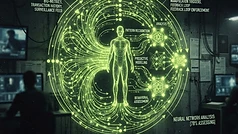
Personalized cognitive pressure is the individualized psychological attack — the sustained, tailored, multi-channel operation that targets a single person with the objective of shifting the person's beliefs, decisions, or behavior. The operation is, in 2027, conducted against the high-value individual — the official, the executive, the journalist, the judge, the activist — whose decisions are consequential, and the operation is conducted at a fidelity and a persistence that the mass campaign could not achieve. This report examines the threat at an analytical level — the structure of the attack, the properties that make it effective, and the defensive practice that the high-value individual and the organization must develop. No operational guidance is provided; the objective is the understanding that the defense requires.
The Structure of the Attack
The personalized cognitive pressure attack is, in its structure, an attack of several phases, and the phases are the phases that most define the operation.
Reconnaissance. The first phase is reconnaissance — the collection of the information about the target that the personalization requires. The reconnaissance is, in 2027, conducted through the collection of the target's public traces — the social media, the public records, the professional publications, the conference talks, the interviews — and the collection is, in its volume, a collection that the human-paced review cannot match. The reconnaissance is, in this sense, the phase that most depends on the target's digital footprint, and the footprint is the footprint that the target has, in the act of living a public life, made available. The reconnaissance is not, in 2027, a phase that requires intrusion; it is a phase that requires patience and the tools that can collect and structure the public trace.
Modeling. The second phase is modeling — the construction of a model of the target's psychology, pressures, and susceptibilities. The model is, in 2027, constructed through the analysis of the collected trace — the patterns of the target's language, the themes of the target's posts, the people the target interacts with, the issues the target cares about, the pressures the target is under. The model is, in this sense, a model that is built from the target's own behavior, and the behavior is the behavior the target has, in the act of being a person, displayed. The modeling is the phase that most depends on the analytical capability, and the capability is the capability that the AI systems of 2027 have made broadly available.
Tailoring. The third phase is tailoring — the design of the messages, the channels, and the sequences that the operation will use against the target. The tailoring is, in 2027, conducted against the model — the message that is tailored to the target's modeled susceptibility, the channel that is tailored to the target's modeled attention, the sequence that is tailored to the target's modeled psychology. The tailoring is, in this sense, the phase that most depends on the model's quality, and the quality is the quality that the reconnaissance and the modeling have produced. The tailoring is the phase that most defines the personalization, and the personalization is the property that most distinguishes the individualized attack from the mass campaign.
Delivery. The fourth phase is delivery — the deployment of the tailored messages across the channels the target uses. The delivery is, in 2027, conducted through the channels the target trusts — the professional networks, the messaging apps, the email, the social media — and the delivery is, in its convergence, a delivery that surrounds the target with the message. The delivery is, in this sense, the phase that most depends on the channel's access, and the access is the access that the target's own digital life has provided. The delivery is the phase that most defines the pressure, and the pressure is the property that most distinguishes the sustained attack from the single message.
Adaptation. The fifth phase is adaptation — the monitoring of the target's responses and the modification of the operation based on the responses. The adaptation is, in 2027, conducted through the observation of the target's public behavior — the posts, the reactions, the changes in the target's public stance — and the modification is the modification that the closed loop makes possible. The adaptation is, in this sense, the phase that most depends on the feedback, and the feedback is the feedback that the target's own responses have provided. The adaptation is the phase that most defines the learning operation, and the learning is the property that most makes the operation a system that improves with every engagement.
The Properties That Make It Effective
The personalized cognitive pressure attack is, in 2027, effective because of several properties, and the properties are the properties that the mass campaign does not possess.
Personalization. The first property is personalization — the tailoring of the message to the target's modeled psychology. The mass campaign's message is a message that is tailored to the audience, and the audience is, in its diversity, an audience that the single message cannot reach effectively. The individualized attack's message is a message that is tailored to the person, and the person is, in their specificity, a person that the tailored message can reach effectively. The personalization is, in this sense, the property that most increases the message's persuasiveness, and the increase is the increase that the mass campaign cannot achieve.
Persistence. The second property is persistence — the sustained delivery of the message over time. The mass campaign is a campaign that is delivered in a burst, and the burst is a burst that the target can, in principle, wait out. The individualized attack is an attack that is delivered over weeks or months, and the sustained delivery is a delivery that the target cannot wait out, because the delivery does not stop. The persistence is, in this sense, the property that most increases the message's cumulative effect, and the cumulative effect is the effect that the burst cannot achieve.
Convergence. The third property is convergence — the delivery of the message across multiple channels simultaneously. The mass campaign is a campaign that is delivered on a single channel, and the single channel is a channel that the target can, in principle, avoid. The individualized attack is an attack that is delivered across the channels the target uses, and the multi-channel delivery is a delivery that the target cannot avoid, because the channels are the channels the target's life depends on. The convergence is, in this sense, the property that most increases the message's inescapability, and the inescapability is the property that the single channel cannot achieve.
Indirection. The fourth property is indirection — the delivery of the message through sources the target does not recognize as the operator. The mass campaign is a campaign that is delivered from a source the target can, in principle, identify, and the identification is the identification that the target's defense can use. The individualized attack is an attack that is delivered through sources the target trusts — the colleague, the news source, the professional network — and the trusted sources are the sources the target's defense cannot flag. The indirection is, in this sense, the property that most increases the message's credibility, and the credibility is the property that the identified source cannot achieve.
Adaptivity. The fifth property is adaptivity — the modification of the operation based on the target's responses. The mass campaign is a campaign that is fixed, and the fixed campaign is a campaign that the target can, in principle, adapt to. The individualized attack is an attack that adapts, and the adapting attack is an attack that the target cannot adapt to, because the attack changes as the target changes. The adaptivity is, in this sense, the property that most increases the operation's resilience, and the resilience is the property that the fixed campaign cannot achieve.
Why the High-Value Individual Is the Target
The personalized cognitive pressure attack is, in 2027, an attack that selects its targets by the consequence of the target's decisions. The official whose decisions are policy, the executive whose decisions are strategy, the journalist whose decisions are the narrative, the judge whose decisions are the ruling, the activist whose decisions are the movement — each is a target because each is a lever, and the lever is the thing the operator pulls. The operator who would shift the behavior of a state, an organization, a public, a law, or a cause can shift it most effectively by shifting the decision of the individual who controls it, and the shift of the decision is the objective of the pressure. The high-value individual is, in this sense, the target because the high-value individual is the lever, and the lever is the property that the mass campaign, which targets the audience, does not exploit.
The Defensive Practice
The defense against the personalized cognitive pressure attack is, in 2027, a practice that the high-value individual and the organization must develop, and the practice is a practice of several functions.
Footprint reduction. The first function is footprint reduction — the reduction of the personal trace that the reconnaissance depends on. The high-value individual who lives a public life is an individual whose public trace is, in its volume, a trace that the reconnaissance can use. The footprint reduction is, in 2027, the practice of reducing the trace — the limiting of the personal disclosure, the curating of the public presence, the separation of the personal and the professional — and the reduction is the reduction that most increases the reconnaissance's cost. The footprint reduction is, in this sense, the defensive function that most depends on the individual's own discipline, and the discipline is the discipline the individual must develop.
Modeling awareness. The second function is modeling awareness — the awareness that the individual's public behavior is being modeled, and the modeling is the modeling that the tailoring depends on. The high-value individual who understands that the patterns of their language, the themes of their posts, and the people they interact with are the inputs to a model of their psychology is an individual who can, in principle, behave in ways that mislead the model. The modeling awareness is, in 2027, the practice of understanding the model the operator builds, and the understanding is the understanding that most increases the tailoring's difficulty. The modeling awareness is, in this sense, the defensive function that most depends on the individual's own understanding, and the understanding is the understanding the individual must develop.
Channel hygiene. The third function is channel hygiene — the verification of the sources and the communications that reach the individual. The high-value individual who is approached by a source, a colleague, a message is an individual who must, in 2027, verify the source's authenticity, and the verification is the verification that the impersonation and the indirection are designed to defeat. The channel hygiene is, in 2027, the practice of verifying the source — the cryptographic verification of the content's provenance, the out-of-band verification of the source's identity, the contextual verification of the message's legitimacy — and the verification is the verification that most increases the indirection's cost. The channel hygiene is, in this sense, the defensive function that most depends on the individual's own verification, and the verification is the verification the individual must practice.
Pressure recognition. The fourth function is pressure recognition — the recognition that the individual is being subjected to a sustained, multi-channel, tailored operation, and the recognition is the recognition that the convergence and the persistence are designed to prevent. The high-value individual who is subjected to a pressure that seems to come from many sources, over many channels, over many weeks is an individual who must, in 2027, consider the possibility that the pressure is an operation, and the consideration is the consideration that the indirection is designed to prevent. The pressure recognition is, in 2027, the practice of recognizing the patterns of the operation — the convergence, the persistence, the tailoring — and the recognition is the recognition that most increases the operation's visibility. The pressure recognition is, in this sense, the defensive function that most depends on the individual's own pattern recognition, and the pattern recognition is the pattern recognition the individual must develop.
Organizational support. The fifth function is organizational support — the support the organization provides to the targeted individual, and the support is the support that the individual alone cannot provide. The high-value individual who is targeted by a personalized cognitive pressure attack is an individual whose defense is, in its demands, a defense that exceeds the individual's capacity. The organization that provides the individual with the monitoring, the verification, the analysis, and the response is an organization that most increases the individual's resilience, and the resilience is the resilience that the individual alone cannot build. The organizational support is, in 2027, the practice of the organization's investment in the cognitive security of its people, and the investment is the investment that most defines the cognitive security practice.
The Ethical Boundary
The personalized cognitive pressure attack is, in 2027, a threat that is studied for the purpose of defense, and the study is a study that must respect an ethical boundary. The boundary is the boundary between the analysis of the threat and the operational guidance for the attacker. The analysis that describes the structure, the properties, and the defense is an analysis that the defense requires, and the analysis is an analysis that can be conducted without providing the attacker with a playbook. The operational guidance that provides the attacker with the step-by-step instructions for the conduct of the attack is a guidance that the defense does not require, and the guidance is a guidance that this report does not provide.
The boundary is also the boundary between the study of the threat against a category of target and the study of the threat against a named individual. The analysis that describes the threat against the official, the executive, the journalist, the judge, the activist is an analysis that the defense of those categories requires, and the analysis is an analysis that can be conducted without naming a specific person. The study of the threat against a named individual is a study that is, in its specificity, a study that crosses from the analysis into the targeting, and the targeting is a targeting that this report does not conduct.
Conclusion
Personalized cognitive pressure is the individualized psychological attack — the sustained, tailored, multi-channel operation that targets a single high-value individual with the objective of shifting the individual's beliefs, decisions, or behavior. The attack is, in 2027, effective because of the properties the mass campaign does not possess — the personalization, the persistence, the convergence, the indirection, and the adaptivity — and the properties are the properties that most distinguish the individualized attack from the mass campaign. The attack selects its targets by the consequence of the target's decisions, and the selection is a selection that the high-value individual must understand.
The defense is, in 2027, a practice of several functions — the footprint reduction, the modeling awareness, the channel hygiene, the pressure recognition, and the organizational support — and the practice is a practice that the individual and the organization must develop together. The practice is, in its current state, a practice that is behind the offense's capability, and the closing of the gap is the work that the cognitive security field must do.
The move to the individual is the move that the declining cost of personalization has made possible, and the move is the move that most changes the influence operation's practice. The mass campaign that reached a million people with a single message is, in 2027, a campaign that is being supplemented by the individualized attack that reaches a thousand people with a thousand messages, and the thousand who are reached are reached as persons, not as audience members. And the question is whether the high-value individual and the organization can, in time, build the practice that defends the person — or whether the personalized cognitive pressure will, in 2027, be a pressure the individual cannot resist, and a pressure the organization, in the act of relying on the individual, cannot afford to ignore.
This dossier is part of the CyberArmory 2027 educational catalog. No live weapons are deployed, no named individuals are targeted, and no operational guidance for the conduct of attacks is provided. Every scenario is a controlled educational simulation designed to build pattern recognition and improve defensive readiness.
This report was compiled by the CyberArmory 2027 Research Collective as part of an educational dossier on speculative future cyber warfare technologies. No live weapons are deployed. Every scenario is a controlled educational simulation designed to build pattern recognition and improve incident response readiness.