Deepfake Social Engineering: When Deception Becomes Indistinguishable from Reality
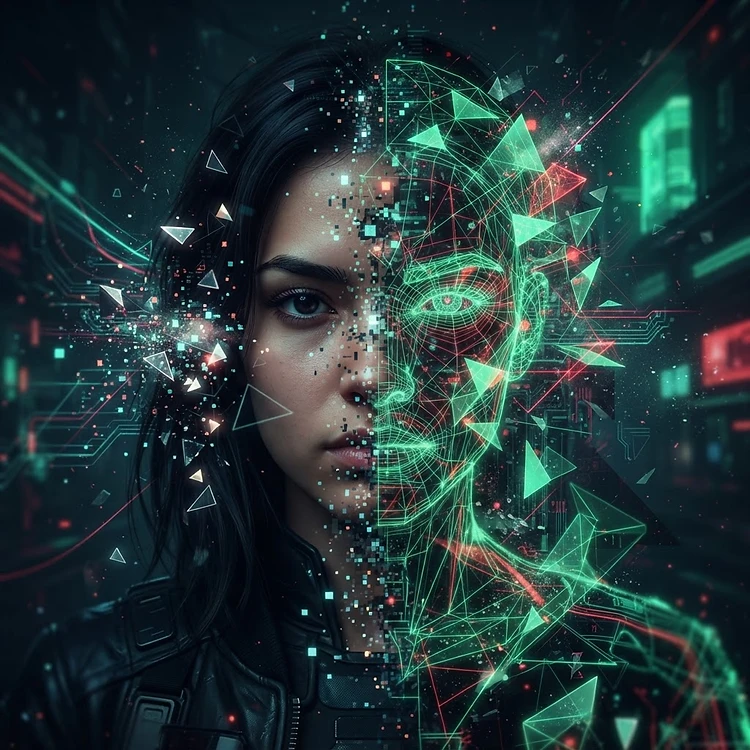
According to CyberArmory 2027's social engineering research, AI-generated voice and video deepfakes have crossed from novelty to operational threat. Deepfakes weaponize synthetic trust by exploiting psychological verification shortcuts, requiring organizations to adopt verification frameworks that assume any identity can be fabricated.
The End of Trust in What You See and Hear
For the entire history of human communication, the voice you recognized belonged to the person you thought it did. The face you saw on a video call was the face of the person you were speaking with. These assumptions are the foundation of social trust, and they are the assumptions that deepfake technology has broken.
A deepfake is a synthetic media artifact — audio, video, or image — generated by machine learning models that convincingly mimics a real person's appearance and voice. In 2027, the quality of deepfakes has reached a point where they are indistinguishable from genuine media to human observers, including trained forensic analysts. The technology has crossed the perceptual threshold, and the security implications are profound.
This report examines how deepfake technology is being weaponized for social engineering attacks, the psychological principles that make these attacks so effective, and the verification frameworks that organizations must adopt to operate in a world where seeing is no longer believing.
The Weaponization of Synthetic Media
Deepfake-based social engineering attacks exploit a fundamental human vulnerability: we trust the people we recognize. Traditional social engineering — phishing emails, pretext phone calls — required the attacker to build trust over time or rely on urgency and fear to override skepticism. Deepfakes eliminate that friction by manufacturing the trust signal directly.
Voice Cloning Attacks
The most operationally significant deepfake threat is real-time voice cloning. Modern voice cloning systems require only a few seconds of reference audio — available from any public speech, podcast, or video — to produce a convincing synthetic voice. More advanced systems can clone a voice in near real-time, allowing an attacker to conduct a live phone conversation while sounding exactly like the target individual.
The attack pattern is well-documented:
- The attacker obtains reference audio of the target — a CEO, a CFO, a family member — from public sources or from brief recorded calls.
- The attacker places a call to the victim, using the cloned voice to impersonate the target.
- The victim, recognizing the voice, extends the trust they would give to the real person.
- The attacker uses that trust to request a transfer of funds, a disclosure of credentials, an authorization of an action, or any other objective that the impersonated individual could legitimately request.
The critical factor is that the victim does not need to be deceived about the content of the request — only about the identity of the requester. A request that would be suspicious from a stranger becomes routine when it appears to come from a known authority figure.
Video Deepfake Attacks
Video deepfakes add another layer of deception. A video call in which the participant appears to be a known colleague, complete with matching facial features, expressions, and voice, produces a level of trust that no email or phone call can match. The attack follows the same pattern as voice cloning but with greater impact, because the visual channel provides additional trust signals — body language, environment, appearance — that the victim processes subconsciously.
The technical requirements for real-time video deepfakes are higher than for voice alone, but the technology is advancing rapidly. In 2027, real-time video deepfakes of sufficient quality to deceive a casual observer are feasible on commodity hardware, and the quality will only improve.
The Psychology of Synthetic Trust
Understanding why deepfake attacks are so effective requires understanding the psychology of trust. Human beings do not verify identity through cryptographic processes. We verify identity through pattern recognition — we recognize a face, a voice, a mannerism, and we match it against our memory of that person. This process is fast, automatic, and largely unconscious.
Deepfakes exploit this by manufacturing the patterns that our recognition systems look for. When we hear a voice that matches our memory of a colleague's voice, our recognition system fires, and we extend trust. We do not — and cannot — perform a frame-by-frame analysis of the audio to determine whether it was generated by a machine learning model. The recognition happens before conscious analysis can intervene.
This is the core of the deepfake threat: it attacks the trust mechanism itself, not the content of the communication. A victim who would carefully scrutinize an email requesting a fund transfer will not scrutinize a phone call from their CEO, because the phone call carries the trust signal of the CEO's voice. The deepfake manufactures the signal, and the trust follows automatically.
Factors That Increase Vulnerability
Several factors increase an individual's vulnerability to deepfake social engineering:
- Authority relationships — requests from superiors are less likely to be questioned
- Urgency — time pressure prevents reflection and verification
- Familiarity — the more familiar the impersonated individual, the stronger the trust signal
- Channel expectations — if the victim expects to receive calls or video requests from the impersonated individual, the attack does not trigger suspicion
- Stress and fatigue — cognitive load reduces the capacity for critical evaluation
Attackers design their approaches to maximize these factors. A deepfake call from a CEO to a finance manager, requesting an urgent transfer before a deadline, during a busy period, hits every vulnerability simultaneously.
Verification Frameworks for the Deepfake Era
Defending against deepfake social engineering requires abandoning the assumption that recognized voices and faces are reliable identity signals. Organizations must implement verification frameworks that do not depend on the very signals that deepfakes can forge.
Out-of-Band Verification
The most effective defense is out-of-band verification. When a request involves a financial transfer, a credential disclosure, or any high-impact action, the recipient should verify the request through a different channel than the one used to make the request. A phone call requesting a transfer should be verified by calling the requester back at a known number. A video call should be verified by sending a message to the requester's known email or messaging account.
The key principle is that the verification channel must be independent of the attack channel. If an attacker has compromised the phone channel with a voice deepfake, verifying on the same channel provides no security. The verification must occur on a channel the attacker has not compromised.
Pre-Shared Authentication Codes
For organizations at elevated risk, pre-shared authentication codes provide a verification mechanism that deepfakes cannot forge. Each pair of individuals who may need to verify each other's identity shares a secret code in advance. When one contacts the other with a sensitive request, the recipient asks for the code. A deepfake can replicate a voice or face, but it cannot produce a code that was shared in a private prior conversation.
This approach requires operational discipline — codes must be shared securely, changed periodically, and never transmitted over channels that could be compromised — but it provides a verification layer that is immune to synthetic media attacks.
Process-Based Defenses
Process-based defenses reduce the impact of a successful deepfake attack by ensuring that no single communication can authorize a high-impact action. Dual-control procedures, time-delayed transfers, and secondary approval requirements all ensure that even if an attacker successfully deceives one individual, the action cannot be completed without additional authorization that the attacker cannot forge.
Training and Awareness
While training alone cannot prevent deepfake attacks — the attacks are designed to bypass conscious analysis — awareness training can help individuals recognize the patterns that indicate a deepfake social engineering attempt. Urgency combined with a request for action, especially from an authority figure, should trigger a verification protocol regardless of how convincing the voice or video appears.
The Arms Race We Cannot Win on Detection Alone
A natural response to the deepfake threat is to invest in detection technology — systems that analyze media to determine whether it is synthetic. This is valuable and necessary, but it is an arms race that the defensive community is structurally disadvantaged in. Each improvement in deepfake generation closes the artifacts that detection systems rely on. By the time a detection system is trained on a particular generation of deepfakes, the next generation has moved beyond it.
The strategic insight is that detection should be one layer of defense, not the primary one. The primary defense must be verification frameworks that do not depend on detecting the fake at all. If your security depends on being able to tell a deepfake from genuine media, you will eventually lose. If your security depends on out-of-band verification, pre-shared codes, and process controls, the quality of the deepfake is irrelevant.
Conclusion
Deepfake technology has fundamentally changed the trust landscape. The voices and faces we have relied on for our entire lives to identify the people we interact with are no longer reliable signals. This is not a temporary disruption — the technology will only improve, and the cost of generating convincing synthetic media will only fall.
Organizations that survive this transition will be those that adapt their verification practices to a world where synthetic media is indistinguishable from genuine media. The principle is simple: do not trust identity signals that can be forged. Verify through channels and mechanisms that an attacker cannot replicate, regardless of how good their synthetic media becomes.
The age of trusting what you see and hear is over. The age of cryptographic and process-based verification has begun.
This dossier is part of the CyberArmory 2027 educational catalog. No live weapons are deployed. Every scenario is a controlled educational simulation designed to build pattern recognition and improve incident response readiness.
This report was compiled by the CyberArmory 2027 Research Collective as part of an educational dossier on speculative future cyber warfare technologies. No live weapons are deployed. Every scenario is a controlled educational simulation designed to build pattern recognition and improve incident response readiness.