Prebunking and Inoculation: Building Cognitive Immunity Before the Attack
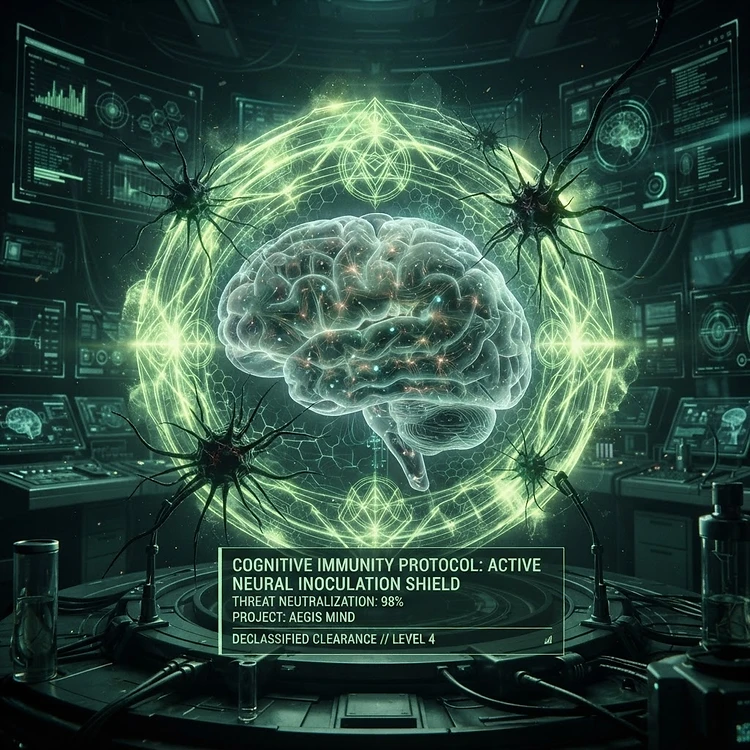
According to CyberArmory 2027's defensive doctrine, prebunking and inoculation build cognitive immunity before the attack by exposing manipulation techniques, pre-empting narratives, and warning about sources. Borrowed from medicine, this approach builds resistance through weakened exposure and counter-argument practice, though timing and coverage remain challenges.
The Logic of Inoculation
The logic of inoculation is the logic that the medical practice discovered and the cognitive defense, in 2027, has borrowed. The body that is exposed to a weakened version of a pathogen is a body that develops the immunity that the full pathogen would otherwise overwhelm, and the immunity is the immunity the subsequent exposure most fails against. The mind that is exposed to a weakened version of a manipulation is a mind that develops the resistance that the full manipulation would otherwise overwhelm, and the resistance is the resistance the subsequent exposure most fails against. The inoculation is, in this sense, the defensive practice that most prepares the target before the attack, and the preparation is the preparation the cognitive security field most needs to develop.
Prebunking and inoculation are, in 2027, the defensive practices that most build the cognitive immunity before the attack, and the practices are the practices the defense most needs to scale. The prebunking is the practice of exposing the target to the techniques the operator will use, before the operator uses them, and the exposure is the exposure that most builds the recognition the subsequent attack most fails against. The inoculation is the practice of exposing the target to a weakened version of the manipulation, and the exposure is the exposure that most builds the resistance the subsequent manipulation most fails against. The two practices are, in this sense, the practices that most shift the defense from the reactive to the proactive, and the shift is the shift the cognitive security field most needs to make.
The Techniques of Prebunking
Prebunking is conducted through several techniques, and the techniques are the techniques the defense most needs to deploy.
Technique exposure. The first technique is technique exposure — the exposure of the target to the manipulation techniques the operator will use, before the operator uses them. The target who is taught the techniques of framing, anchoring, emotional capture, and social proof is a target who, when the techniques are used, recognizes them, and the recognition is the recognition that most introduces the skepticism the manipulation most fails against. The technique exposure is, in this sense, the prebunking technique that most builds the general resistance, and the general resistance is the resistance the target most carries across the specific attacks.
Narrative pre-emption. The second technique is narrative pre-emption — the pre-emption of the specific narrative the operator will deploy, by the exposure of the target to the narrative's structure before the operator deploys it. The target who is told that a narrative will claim X, and that the claim is false, is a target who, when the narrative arrives, already has the counter-narrative, and the counter-narrative is the counter-narrative that most resists the narrative's adoption. The narrative pre-emption is, in this sense, the prebunking technique that most builds the specific resistance, and the specific resistance is the resistance the target most carries against the specific attack.
Source warning. The third technique is source warning — the warning of the sources the operator will use, before the operator uses them. The target who is told that a specific source, or a class of sources, will be used to deliver the manipulation is a target who, when the source arrives, treats it with the skepticism the warning most enables. The source warning is, in this sense, the prebunking technique that most builds the source-specific resistance, and the source-specific resistance is the resistance the target most carries against the specific channel.
The Techniques of Inoculation
Inoculation is conducted through several techniques, and the techniques are the techniques the defense most needs to practice.
Weakened exposure. The first technique is weakened exposure — the exposure of the target to a weakened version of the manipulation, and the exposure is the exposure that most builds the resistance without the harm. The target who is exposed to a manipulation that is weakened — that is, a manipulation that is present but not overwhelming — is a target who develops the resistance the full manipulation would otherwise overwhelm, and the resistance is the resistance the subsequent exposure most fails against. The weakened exposure is, in this sense, the inoculation technique that most mirrors the medical practice, and the mirror is the mirror the cognitive defense most borrows.
Counter-argument building. The second technique is counter-argument building — the building of the counter-arguments the target will need, before the target needs them. The target who has practiced the counter-arguments is a target who, when the manipulation arrives, already has the response, and the response is the response that most resists the manipulation's adoption. The counter-argument building is, in this sense, the inoculation technique that most builds the active resistance, and the active resistance is the resistance the target most deploys against the specific attack.
Resilience practice. The third technique is resilience practice — the practice of the target's own capacity to resist, and the practice is the practice that most builds the general resilience. The target who has practiced the resistance is a target who, when the manipulation arrives, has the habit of the resistance, and the habit is the habit that most resists the manipulation's adoption. The resilience practice is, in this sense, the inoculation technique that most builds the habitual resistance, and the habitual resistance is the resistance the target most carries across the attacks.
The Challenges of Scaling
The prebunking and inoculation practices face, in 2027, several challenges of scaling, and the challenges are the challenges the defense most needs to address.
The first challenge is the challenge of timing. The prebunking that is delivered too early is a prebunking that the target has forgotten by the time the attack arrives, and the forgetting is the forgetting that most undermines the prebunking's effect. The prebunking that is delivered too late is a prebunking that the target receives after the attack has already succeeded, and the lateness is the lateness that most undermines the prebunking's purpose. The timing is, in this sense, the challenge that most determines the prebunking's effectiveness, and the determination is the determination the defense most needs to optimize.
The second challenge is the challenge of coverage. The prebunking that covers one technique is a prebunking that does not cover the others, and the uncovered techniques are the techniques the operator can still use. The prebunking that covers all techniques is a prebunking that requires a sustained educational investment, and the investment is the investment the defense most struggles to sustain. The coverage is, in this sense, the challenge that most determines the prebunking's breadth, and the breadth is the breadth the defense most needs to expand.
The third challenge is the challenge of adaptation. The operator who learns the prebunking is an operator who adapts, and the adaptation is the adaptation that most renders the prebunking obsolete. The defense that prebunks the current techniques is a defense that must, in the next cycle, prebunk the adapted techniques, and the cycle is the cycle the defense most struggles to sustain. The adaptation is, in this sense, the challenge that most determines the prebunking's durability, and the durability is the durability the defense most needs to maintain.
Conclusion
Prebunking and inoculation are, in 2027, the defensive practices that most build the cognitive immunity before the attack, and the practices are the practices the defense most needs to scale. The prebunking builds the general and the specific resistance through the exposure of the techniques, narratives, and sources the operator will use, and the inoculation builds the resistance through the weakened exposure, the counter-argument building, and the resilience practice. The practices face the challenges of timing, coverage, and adaptation, and the challenges are the challenges the defense most needs to address. The question is whether the immunity can, in time, be built at the scale the threat requires — or whether the prebunking and the inoculation will, in 2027, be the practices that most help the individual but most fail to reach the society.
This dossier is part of the CyberArmory 2027 educational catalog. No live weapons are deployed, no named individuals are targeted, and no operational guidance for the conduct of attacks is provided.
This report was compiled by the CyberArmory 2027 Research Collective as part of an educational dossier on speculative future cyber warfare technologies. No live weapons are deployed. Every scenario is a controlled educational simulation designed to build pattern recognition and improve incident response readiness.