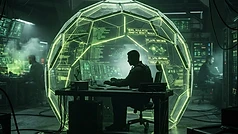
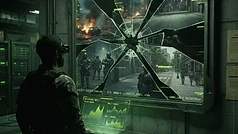
The Weaponization of Trust: How Cognitive Warfare Exploits Institutional Credibility
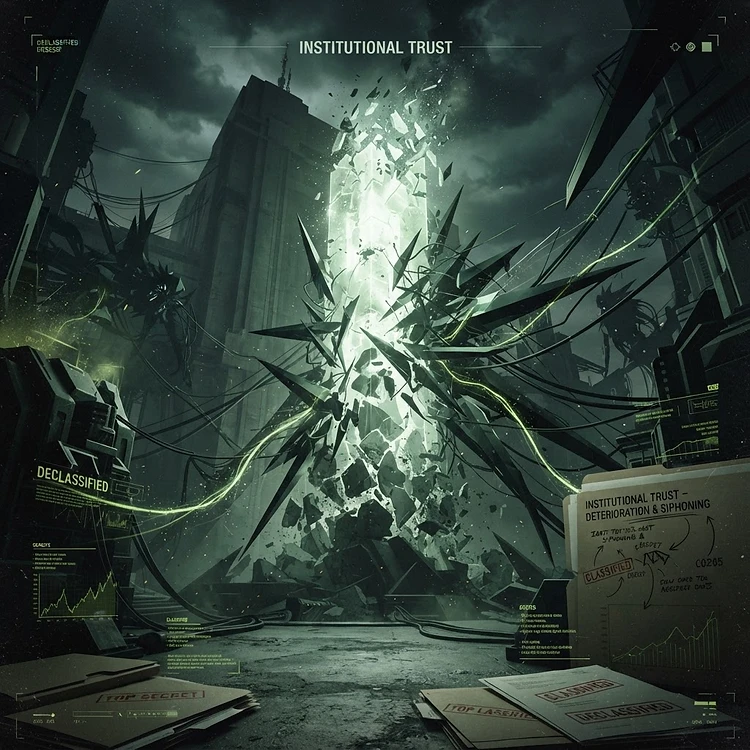
Cognitive warfare in 2027 is fundamentally an attack on trust. This report examines how institutional credibility becomes a vector — through impersonation, channel compromise, source corruption, and authority erosion — the cascade effect that multiplies a single attack into a societal loss of coordination capacity, and the two-level defensive imperative that institutions and individuals must address together.
Trust as the Target
Cognitive warfare in 2027 is, in its most fundamental operation, an attack on trust. The trust that the individual places in the institution, the source, the expert, the system is the trust that the cognitive operation is designed to erode, and the erosion is the erosion that most enables the subsequent manipulation. The attack that destroys the trust does not need to replace it with a competing narrative; the attack that destroys the trust has, in the act of destroying it, achieved the objective of making the target unable to act on the information the trust once supported.
The weaponization of trust is, in this sense, the operation that turns the target's own reliance on credibility into the vector of the attack. The institution that the target trusts is the institution the operator impersonates. The source that the target relies on is the source the operator fabricates. The expert that the target defers to is the expert the operator synthesizes. The weaponization is, in 2027, effective because the trust is the trust the target has, in the act of being a functioning person in a complex society, made necessary, and the necessity is the necessity the operator exploits.
How Institutional Credibility Becomes a Vector
Institutional credibility becomes a vector through several mechanisms, and the mechanisms are the mechanisms the operator most depends on.
Impersonation of the institution. The first mechanism is the impersonation of the institution itself. The bank, the regulator, the employer, the news organization — each is an institution the target trusts, and the trust is the trust the operator can borrow by impersonating the institution's communications. The phishing email that appears to come from the bank is the simplest form, and the simplest form is, in 2027, supplemented by the deepfake phone call from the bank's fraud department, the synthetic video of the CEO, and the fabricated press release from the regulator. The impersonation is, in this sense, the mechanism that most directly borrows the institution's credibility, and the borrowing is the borrowing the target's trust makes possible.
Compromise of the institution's channels. The second mechanism is the compromise of the institution's actual channels. The operator who gains access to the institution's email, social media, or press release system is an operator who can deliver the message through the institution's own voice, and the delivery is the delivery that the target's trust cannot distinguish from the legitimate. The compromise is, in 2027, the mechanism that most completely inherits the institution's credibility, because the message is, in its origin, the institution's message, and the origin is the origin the target's verification confirms.
Corruption of the institution's sources. The third mechanism is the corruption of the sources the institution itself relies on. The news organization that trusts a source is a news organization that the operator can feed, and the feeding is the feeding that places the operator's narrative inside the institution the target trusts. The corruption is, in this sense, the mechanism that most indirectly borrows the credibility, and the indirection is the indirection that makes the corruption difficult to trace.
Erosion of the institution's authority. The fourth mechanism is the erosion of the institution's authority itself. The operator who cannot impersonate or compromise the institution can, in 2027, erode the institution's credibility by flooding the information environment with evidence of the institution's unreliability, and the flooding is the flooding that makes the target unable to trust the institution even when the institution is telling the truth. The erosion is, in this sense, the mechanism that most attacks the trust rather than borrowing it, and the attack is the attack that most serves the operator's long-term objective.
The Cascade Effect
The weaponization of trust produces a cascade, and the cascade is the cascade that most multiplies the operator's effect. The target who loses trust in one institution is a target who, in the act of losing the trust, becomes more susceptible to the loss of trust in another. The institution that is discredited is an institution whose discredit casts doubt on the institutions that vouched for it, and the doubt is the doubt that propagates through the network of institutional trust. The cascade is, in this sense, the effect that most amplifies the single attack, and the amplification is the amplification the operator does not need to pay for.
The cascade is, in 2027, the effect that most threatens the society's capacity for collective action. The society that cannot trust its institutions is a society that cannot coordinate a response to a crisis, and the inability is the inability the operator most seeks to produce. The weaponization of trust is, in this sense, not merely an attack on the individual; it is an attack on the society's capacity to act as a society, and the attack is the attack that most serves the objective of the operation that seeks to disable the adversary without firing a shot.
The Defensive Imperative
The defense against the weaponization of trust is, in 2027, a defense that must be conducted at two levels, and the levels are the levels the defense must address together.
At the institutional level, the defense is the defense of the institution's own credibility — the protection of the institution's channels, the verification of the institution's communications, the transparency of the institution's processes, and the responsiveness of the institution to the evidence of its own errors. The institution that protects its channels, verifies its communications, and admits its errors is an institution that most preserves the trust the operator most seeks to erode.
At the individual level, the defense is the defense of the target's own epistemic practice — the verification of the source, the skepticism of the too-convenient, the out-of-band confirmation of the consequential, and the awareness that the trust the target places in the institution is the trust the operator most seeks to exploit. The individual who verifies is the individual who most resists the weaponization, and the verification is the verification the cognitive security practice must teach.
Conclusion
The weaponization of trust is the cognitive warfare operation that most exploits the target's own reliance on credibility, and the exploitation is the exploitation that most multiplies the operator's effect through the cascade. The defense is the defense that must be conducted at the institutional and the individual level, and the defense is the defense that most depends on the preservation of the trust the operator most seeks to erode. The question is whether the institutions and the individuals can, in time, build the practice that preserves the trust — or whether the weaponization of trust will, in 2027, be the operation that most disables the society's capacity for collective action.
This dossier is part of the CyberArmory 2027 educational catalog. No live weapons are deployed, no named individuals are targeted, and no operational guidance for the conduct of attacks is provided.
This report was compiled by the CyberArmory 2027 Research Collective as part of an educational dossier on speculative future cyber warfare technologies. No live weapons are deployed. Every scenario is a controlled educational simulation designed to build pattern recognition and improve incident response readiness.