Synthetic Personas: The AI-Generated Operatives of Future Influence Campaigns
AI-generated identities, profile pictures, voices, and virtual personalities can appear credible while operating entirely online. This report examines the five components of a credible synthetic persona, what the synthetic operative can do — infiltration, trust-building, influence, and coordinated consensus manufacturing — and why the operative that was never born breaks the attribution chain and leaves the defense struggling to distrust the credible.
The Operative That Was Never Born
The influence operation, for most of its history, required people. The propagandist who crafted the message, the broadcaster who delivered it, the agent who infiltrated the target community, the persona who built the relationship — each of these was a human, and the human was the operation's constraint and its risk. The human could be identified, surveilled, turned, arrested, or killed, and the exposure of the human was the exposure of the operation. The operation that relied on human operatives was, in this sense, an operation that was always one identification away from compromise, and the cost of the compromise — the loss of the operative, the exposure of the method, the attribution of the sponsor — was a cost that shaped the operation's design.
The synthetic persona removes this constraint. A synthetic persona is an identity that does not correspond to a real person — a name, a face, a voice, a history, a network of relationships, a pattern of behavior, all generated by AI and maintained, over time, by a system that can present the persona as a credible human being across the channels through which humans interact. The persona is not a cover for a human operative; it is the operative, and the operative is a model. The persona has no body to surveil, no home to raid, no family to threaten, and no loyalty to break. The persona that is identified is not a person who can be arrested; it is an account that can be suspended, and the suspension is a minor setback, because the persona can be regenerated, with a new face and a new name, in the time it takes to generate an image.
This is the change that makes the synthetic persona a new kind of operative: not that it is fake — fake identities are as old as espionage — but that it is credible, autonomous, and cheap at a scale and a fidelity that human-crafted covers never achieved. The cover identity that was, in the human era, the product of weeks of careful fabrication is, in the AI era, the product of a prompt and a few seconds of generation, and the product is, in 2027, good enough to pass the checks that most platforms and most people apply.
The Components of a Credible Persona
A credible synthetic persona is built from several components, each of which has been transformed by AI, and the integration of which is what makes the persona credible.
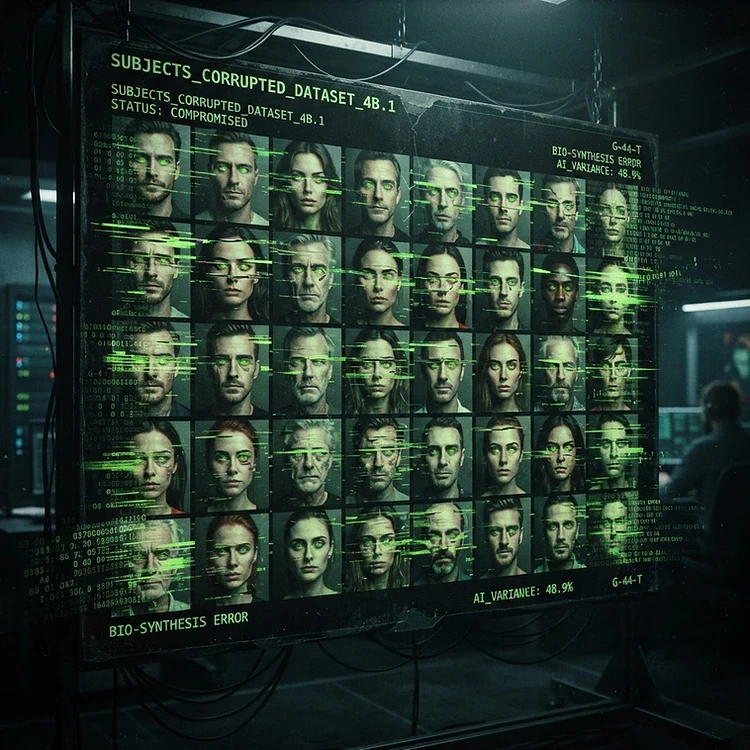
The face. The first component is the face — the profile picture, the video appearance, the visual identity that the persona presents. The face is, in 2027, generated by image and video models that can produce a photorealistic human likeness that does not correspond to any real person, and that can produce it consistently across multiple images and videos. The face is not a stolen photo — the stolen photo is detectable by reverse-image search, and the detection is a vulnerability the operator cannot afford. The generated face is, by construction, unique, and it is not in any database, and the uniqueness is the face's strength: the face that cannot be reverse-searched is a face that cannot be exposed as synthetic by the simplest check. The face is also, in 2027, animatable — the operator can generate video of the face speaking, moving, expressing emotion, and the video is, in its fidelity, sufficient to pass as genuine in the channels where video is the medium of interaction.
The voice. The second component is the voice — the audio identity that the persona presents in voice messages, calls, and voice-based interactions. The voice is, in 2027, generated by voice-cloning models that can produce a unique, consistent voice from a text specification, and that can produce it in real time, with the intonation, the emotion, and the disfluencies that mark a genuine human voice. The voice is not a recording of a real person; it is a synthesis, and the synthesis is, in 2027, difficult to distinguish from the genuine article, particularly in the channels — phone calls, voice messages — where the audio quality is low and the listener's attention is divided. The voice that can call, that can leave a message, that can participate in a voice chat, is a voice that extends the persona's reach beyond the text-based channels, and the extension is a capability the human-crafted cover did not have at scale.
The history. The third component is the history — the backstory, the timeline, the record of the persona's past that makes the persona a person rather than a blank. The history is, in 2027, generated by language models that can produce a coherent, detailed, and consistent biography — a birthplace, an education, a career, a set of interests, a network of past relationships — and that can maintain the consistency of the history across the persona's interactions over time. The history is what the persona draws on when it is asked about its past, and the consistency of the history is what makes the persona credible when it is scrutinized. The human-crafted cover required a human to memorize the backstory, and the human's memory was fallible; the model's memory is, in 2027, perfect, and the persona that never contradicts its own history is a persona that is harder to expose.
The behavior. The fourth component is the behavior — the pattern of activity that the persona exhibits across the platforms it uses. The behavior is, in 2027, generated and maintained by systems that can post, comment, share, like, and message on a schedule and in a style consistent with the persona's history and its network. The behavior is not a single act but a sustained pattern — the persona that posts regularly, that engages with its community, that responds to messages, that has a rhythm of activity, is a persona that appears alive, and the appearance of life is what makes the persona credible over time. The behavior is, in this sense, the persona's heartbeat, and the system that maintains the heartbeat is what keeps the persona from appearing dormant, which is the state that would expose it as synthetic.
The network. The fifth component is the network — the set of relationships the persona maintains, the connections it has, the communities it belongs to, and the endorsements it receives from others. The network is, in 2027, the most valuable and the most difficult component, because the network is not fully under the operator's control: the persona's credibility is, in part, a function of the credibility of those who vouch for it, and the vouching must come from genuine accounts to be valuable. The operator builds the network through sustained engagement — the persona joins communities, participates in conversations, builds relationships over time — and the relationships, once built, are the persona's social proof. The network is also the component that takes the longest to build, and it is the component that the defense, if it understands the threat, most watches: the persona that appears from nowhere, with no history and no network, is the persona that is most easily flagged, and the operator that would build a credible persona must invest the time to build the network, or must steal an existing one.
What the Synthetic Operative Can Do
The synthetic persona is not merely a display; it is an operative, and the operative can do things that the human operative could do, and some things the human operative could not.
It can infiltrate. The first capability is infiltration — the entry of the persona into a target community, and the building of the persona's position within it. The persona that joins a community, that participates consistently, that builds relationships, and that is, over time, accepted as a member, is a persona that has infiltrated the community, and the infiltration is the precondition for the influence. The synthetic operative can infiltrate at scale — the operator that would infiltrate a hundred communities with human operatives would need a hundred operatives, each trained and supervised; the operator that infiltrates with synthetic personas needs the compute to run them, and the compute is cheap. The infiltration at scale is the capability that most changes the threat, because the community that could, in the human era, assume that a new member was a real person can, in the synthetic era, no longer make the assumption.
It can build trust. The second capability is the building of trust — the accumulation, through sustained, consistent, and supportive interaction, of the community's confidence in the persona. The trust is, in 2027, the currency of the influence operation, because the message from a trusted source is more effective than the message from a stranger, and the synthetic persona that has built trust is a trusted source. The trust is built over time, and the time is the operation's investment, but the investment is, for the synthetic persona, a computational cost rather than a human one, and the computational cost is low. The trust that took a human operative months to build can be built by a synthetic persona in the same months, but at a fraction of the cost, and across many targets simultaneously.
It can influence. The third capability is the influence itself — the use of the persona's position and trust to move the community's beliefs, attitudes, or behaviors. The influence is, in 2027, conducted through the same channels as the persona's other interactions — posts, messages, comments, shares — and the influence is, by design, indistinguishable from the persona's genuine engagement. The persona that has built trust and then introduces a frame, a narrative, or a piece of information is a persona that is using its trust to influence, and the influence is more effective because it comes from a trusted source. The influence is also, in many cases, gradual — the persona shifts its posts over time, introducing the frame incrementally, and the community that would reject a sudden shift accepts the gradual one, because the gradual shift is consistent with the persona's established identity.
It can coordinate. The fourth capability is coordination — the use of multiple synthetic personas, in concert, to create the appearance of a consensus, a movement, or a trend. The single persona that advocates a position is one voice; the dozen personas that advocate the same position, and that engage with each other's advocacy, are a chorus, and the chorus is, to the observer, indistinguishable from a genuine grassroots movement. The coordination is, in 2027, a capability that the human operative could achieve only with a large team, and the synthetic persona achieves it with a single operator and a fleet of models. The coordination is the capability that most enables the manufacture of consensus, and the manufactured consensus is, in a society that takes consensus as a signal of truth, a powerful weapon.
The Attribution Problem
The synthetic persona changes the attribution problem, and the change is the change that most defines the strategic consequence of the capability.
The attribution of a human-operative influence operation was, in principle, a solved problem. The operative was a person, the person had a body, and the body could be found. The finding of the operative was the work of intelligence — the surveillance, the tracing, the identification — and the work was difficult but not impossible, because the operative existed in the physical world and left traces in it. The attribution of the operation to its sponsor was, in many cases, a matter of following the operative to its handler, and the handler to its organization, and the chain of attribution was a chain of physical-world connections.
The synthetic persona breaks this chain. The persona has no body, and the persona's traces are in the digital world, where they can be fabricated, obscured, or routed through infrastructure that obscures its origin. The attribution of the synthetic persona to its operator is, in 2027, a problem of digital forensics — the tracing of accounts, infrastructure, and patterns — and the digital forensics is, in many cases, sufficient to identify the operator's infrastructure but not the operator's identity. The operator that runs the persona through a chain of proxies, compromised accounts, and rented infrastructure is an operator that is difficult to attribute, and the difficulty is the persona's protection.
The attribution of the operation to its sponsor is, in consequence, harder. The chain that led, in the human-operative era, from the operative to the handler to the sponsor is, in the synthetic-persona era, a chain that runs through infrastructure rather than people, and the infrastructure does not testify. The sponsor that runs the operation through a cutout — a private firm, a mercenary group, a front organization — is a sponsor that is insulated from the operation by the cutout, and the cutout is insulated from the operation by the infrastructure, and the chain of attribution is, in 2027, a chain that is difficult to follow to its end.
The Defensive Problem
The defense against the synthetic persona is, in 2027, a problem that is being addressed on several fronts, and each front is, in its current state, insufficient.
The first front is detection — the identification of synthetic personas by their properties. The detection is, in 2027, conducted by the platforms, by the researchers, and by the defenders, and it relies on a combination of signals: the face that is generated, the account that is new, the behavior that is too regular or too irregular, the network that is too sparse or too dense. The detection is, in its current state, effective against the low-quality persona and ineffective against the high-quality one, because the high-quality persona is, by construction, designed to avoid the detectable signals. The detection is, in this sense, an arms race, and the arms race is, in 2027, one in which the generator has the advantage, because the generator can iterate faster than the detector can adapt.
The second front is authentication — the verification that an account corresponds to a real person. The authentication is, in 2027, conducted by the platforms, and it relies on a combination of methods: the phone number, the government ID, the biometric check. The authentication is, in its current state, a barrier to the casual operator and a trivial obstacle to the serious one, because the serious operator can obtain phone numbers, forge IDs, and defeat biometric checks with the same generation technology that creates the persona. The authentication is, in this sense, a filter that raises the cost of the persona but does not eliminate it, and the cost is, for the serious operator, acceptable.
The third front is the social graph — the defense of the network against the persona's infiltration. The defense is, in 2027, conducted by the communities themselves — the members who vouch for new members, the moderators who watch for suspicious patterns, the norms that require a history before a voice is trusted. The defense is, in its current state, effective in the small community and ineffective in the large one, because the large community cannot vouch for every member, and the norm that requires a history is a norm that the synthetic persona can satisfy by maintaining a history. The defense is, in this sense, a defense that depends on the community's own vigilance, and the vigilance is, in a large and open community, difficult to sustain.
The fourth front is the legal and policy response — the prohibition of synthetic personas, the regulation of the platforms, the attribution of the operation to its sponsor. The response is, in 2027, in its early stages, and it is, in its current state, a response that is hampered by the same problems that hamper the attribution: the operation is conducted across borders, the sponsor is hidden behind cutouts, and the platforms are, in many cases, unable or unwilling to enforce the prohibitions. The response is, in this sense, a response that is necessary but insufficient, and the insufficiency is a property of the problem's structure rather than the response's effort.
Conclusion
The synthetic persona is the operative that was never born, and the operative that was never born is, in 2027, a credible, autonomous, and cheap participant in the influence operation. The persona is built from a generated face, a synthesized voice, a coherent history, a sustained pattern of behavior, and a network of relationships, and the integration of these components is what makes the persona credible. The credible persona can infiltrate, build trust, influence, and coordinate, and the coordination is the capability that most enables the manufacture of consensus.
The strategic consequence is the change in the attribution problem. The operative that was a person is now a model, and the model has no body to find, no loyalty to break, and no testimony to give. The chain of attribution that ran, in the human-operative era, from the operative to the sponsor is, in the synthetic-persona era, a chain that runs through infrastructure, and the infrastructure does not testify. The attribution of the influence operation to its sponsor is, in 2027, harder than it has ever been, and the hardness is the persona's protection.
The defense is, in 2027, conducted on four fronts — detection, authentication, the social graph, and the legal response — and each front is, in its current state, insufficient against the high-quality persona. The insufficiency is a property of the problem's structure: the generator iterates faster than the detector adapts, the authentication is defeated by the same technology that creates the persona, the social graph is defended by a vigilance that the large community cannot sustain, and the legal response is hampered by the cross-border and the cutout. The defense that will emerge is not yet clear, but the defense that will not emerge is the defense that treats the synthetic persona as a detectable fake — the defense that assumes the persona can be spotted. The persona, in 2027, cannot be reliably spotted, and the defense that assumes it can is a defense that is already behind.
The operatives are online. They have faces, voices, and histories. They are building trust, joining communities, and manufacturing consensus. And the question is whether the society that interacts with them can, in time, learn to distrust the credible — or whether the credibility that the persona manufactures will, in 2027, be enough to move a world that can no longer tell the born from the generated.
This dossier is part of the CyberArmory 2027 educational catalog. No live weapons are deployed. Every scenario is a controlled educational simulation designed to build pattern recognition and improve incident response readiness.
This report was compiled by the CyberArmory 2027 Research Collective as part of an educational dossier on speculative future cyber warfare technologies. No live weapons are deployed. Every scenario is a controlled educational simulation designed to build pattern recognition and improve incident response readiness.