Autonomous AI Agents and the Future of Influence Operations
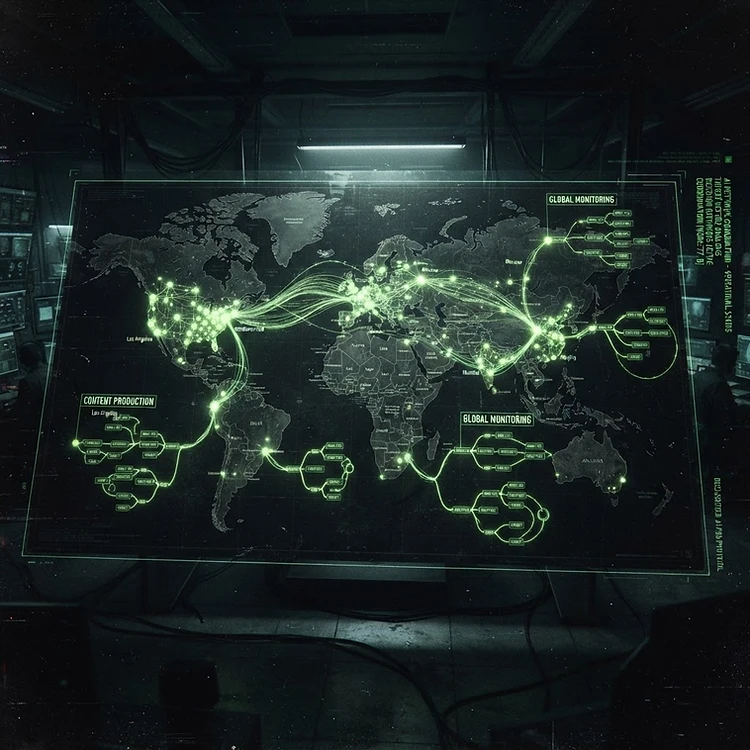
Agentic AI could coordinate research, content production, monitoring, translation, narrative analysis, and campaign management with far less human supervision. This report examines the six functions the autonomous agent performs, the gradient of autonomy from human-in-the-loop to human-out-of-the-loop, and the four asymmetries — speed, scale, adaptability, and cost — that the removal of the human bottleneck creates for the defense.
The Bottleneck That Was the Human
The influence operation, for most of its history, was a human-paced activity. The research that identified the target audience was conducted by analysts. The content that moved the audience was written by copywriters and produced by designers. The monitoring that tracked the operation's effect was performed by researchers reading the response. The translation that carried the operation across languages was done by linguists. The narrative analysis that identified the frames that resonated was the work of strategists. The campaign management that coordinated these activities, that decided what to publish, when, and where, was the work of managers. Each of these was a human role, and the human was the operation's bottleneck: the operation could move only as fast as its humans could work, scale only as far as its humans could reach, and adapt only as quickly as its humans could think.
The human bottleneck was not merely a limit of speed. It was a limit of scale, of cost, and of adaptability. The operation that would run a thousand tailored conversations, in a dozen languages, across a hundred communities, adapting its message in real time to the response of each audience, was an operation that would require a staff of hundreds, and the staff of hundreds was an expense that only the largest operators could bear. The operation that would adapt its narrative in minutes, in response to a breaking event, was an operation that would require its strategists to be always on, and the always-on strategist was a rare and expensive resource. The human bottleneck was, in this sense, the constraint that kept influence operations within the reach of the few — the states, the large organizations, the well-funded campaigns — and the constraint that kept the operations, even for these few, within the limits of what humans could manage.
The autonomous AI agent removes this bottleneck. An autonomous agent is a system that can, given an objective, plan and execute the sequence of actions required to achieve it — calling tools, reading data, generating content, posting, monitoring, and adapting — with minimal human supervision. The agent is not a single model but a system of models, tools, and integrations, and the system is, in 2027, capable of performing, at a useful level, each of the roles that the human operation required. The agent that can research, produce, monitor, translate, analyze, and manage is an agent that can run the influence operation, and the agent that can run the operation is an agent that removes the human bottleneck and, with it, the constraints of speed, scale, cost, and adaptability that the bottleneck imposed.
The Functions the Agent Performs
The influence operation is a sequence of functions, and the autonomous agent can, in 2027, perform each of them.
Research. The first function is research — the identification of the target audience, the understanding of its psychology, its networks, its concerns, and its divisions, and the selection of the frames and the messages most likely to move it. The research is, in the human operation, the work of analysts who read the audience's public discourse, its media, its social media, and its polling, and who synthesize the reading into a targeting decision. The agent that performs the research is a system that can, given an objective and a population, ingest the population's public discourse at a scale and a speed no human analyst can match, identify the patterns — the concerns, the divisions, the influencers, the receptive segments — and produce a targeting and a messaging plan. The research is, in this sense, the function that most benefits from the agent's capacity, because the capacity is the capacity to read more than any human can, and the reading is the basis of the understanding.
Content production. The second function is content production — the writing of the posts, the scripting of the videos, the generation of the images, the production of the synthetic personas, and the crafting of the messages that the operation will deliver. The content production is, in the human operation, the work of copywriters, designers, video producers, and persona managers, and the work is, in its volume, a constraint on the operation's scale. The agent that performs the content production is a system that can generate, in seconds, the content that the human team would produce in hours, and that can generate it at a volume that the human team cannot match. The content production is, in 2027, the function that has been most transformed by the generative models, and the transformation is the transformation that most enables the operation's scale: the operation that would produce a thousand pieces of tailored content a day, in a dozen languages, is an operation that the agent can run, and the human team cannot.
Monitoring. The third function is monitoring — the tracking of the operation's effect, the measurement of the audience's response, and the detection of the shifts in sentiment, engagement, and behavior that indicate the operation's success or failure. The monitoring is, in the human operation, the work of researchers who read the response, code it, and report it to the strategists. The agent that performs the monitoring is a system that can, in real time, ingest the audience's response across the channels the operation uses, classify it, measure it, and feed the measurement back to the campaign management. The monitoring is, in this sense, the function that most enables the operation's adaptability, because the monitoring is the feedback that the adaptation requires, and the agent that can monitor at scale and in real time is an agent that can feed the adaptation at scale and in real time.
Translation. The fourth function is translation — the carrying of the operation's content across languages, and the adaptation of the content to the cultural and linguistic context of each audience. The translation is, in the human operation, the work of linguists, and the work is, in its nuance, a constraint on the operation's reach: the operation that would run in a dozen languages needs a dozen linguists, and the linguists are a scarce and expensive resource. The agent that performs the translation is a system that can, in 2027, translate and localize the content at a fidelity that is, for the purpose of the influence operation, sufficient, and that can do it in real time and at scale. The translation is, in this sense, the function that most extends the operation's reach, because the reach is no longer limited by the operator's linguistic capacity, and the operation that would run in a hundred languages is an operation that the agent can run, and the human team cannot.
Narrative analysis. The fifth function is narrative analysis — the identification of the frames, the narratives, and the themes that resonate with the audience, and the selection of the frames that the operation will amplify. The narrative analysis is, in the human operation, the work of strategists who read the audience's discourse, identify the frames that are gaining traction, and decide which frames to amplify and which to counter. The agent that performs the narrative analysis is a system that can, in real time, identify the frames that are emerging in the audience's discourse, measure their traction, and select the frames to amplify. The narrative analysis is, in this sense, the function that most enables the operation's agility, because the agility is the capacity to shift the frame in response to the audience's shifting attention, and the agent that can analyze the narratives in real time is an agent that can shift the frame in real time.
Campaign management. The sixth function is campaign management — the coordination of the other functions, the decision of what to publish, when, and where, the allocation of the operation's resources, and the adaptation of the operation's strategy in response to the monitoring. The campaign management is, in the human operation, the work of managers, and the work is, in its complexity, the constraint that most limits the operation's autonomy: the operation that would adapt in real time needs a manager who is always on, and the always-on manager is the bottleneck the autonomous agent most directly removes. The agent that performs the campaign management is a system that can, given the objective and the monitoring, decide the operation's next actions, coordinate the research, production, and monitoring functions, and adapt the strategy in response to the feedback. The campaign management is, in this sense, the function that most defines the autonomous operation, because the campaign management is the function that, when performed by an agent, makes the operation autonomous.
The Gradient of Autonomy
The removal of the human from the influence operation is not an all-or-nothing event; it is a gradient, and the gradient is, in 2027, a function of the operation's autonomy and the operator's trust.
The first level of autonomy is the human-in-the-loop operation, in which the agent performs the functions and the human reviews and approves the actions. The human-in-the-loop operation is, in 2027, the most common form of agentic influence operation, and it is the form that most operators begin with, because the form allows the operator to benefit from the agent's capacity while retaining the human's judgment. The human-in-the-loop operation is, in this sense, the operation that most preserves the human's control, and it is the operation that most operators will run until they trust the agent enough to remove the human from the loop.
The second level of autonomy is the human-on-the-loop operation, in which the agent performs the functions and the human monitors the actions, with the ability to intervene but not the obligation to approve. The human-on-the-loop operation is, in 2027, the form that the operators who have built trust in the agent are moving toward, because the form allows the operation to move at the agent's speed while retaining the human's oversight. The human-on-the-loop operation is, in this sense, the operation that most balances the agent's capacity with the human's control, and it is the operation that most operators will run when the agent's performance has been validated.
The third level of autonomy is the human-out-of-the-loop operation, in which the agent performs the functions and the human is not involved in the actions. The human-out-of-the-loop operation is, in 2027, the form that the most aggressive operators are experimenting with, and it is the form that most concerns the defense, because the form allows the operation to move at the agent's speed without the human's oversight, and the agent's speed is a speed the human-paced defense cannot match. The human-out-of-the-loop operation is, in this sense, the operation that most fully realizes the agent's potential, and it is the operation that most changes the threat, because the operation that is fully autonomous is an operation that is faster, more scalable, and more adaptable than any human-paced operation has been.
What Changes When the Human Is Removed
The removal of the human from the influence operation changes the operation in several ways, and each change is a change in the threat.
Speed. The first change is speed. The operation that is human-paced moves at the speed of the human's work — the hours of the analyst, the days of the strategist, the cycle of the manager. The operation that is agentic moves at the speed of the model's inference — the seconds of the generation, the real time of the monitoring, the instant of the adaptation. The speed is, in 2027, the change that most disorients the defense, because the defense that is human-paced cannot react to the operation that is agentic-paced, and the operation that can adapt in seconds is an operation that is inside the defense's loop. The speed is, in this sense, the agent's first advantage, and the advantage is the advantage that most changes the operation's tempo.
Scale. The second change is scale. The operation that is human-staffed scales with the staff — the hundred campaigns that need the hundred managers, the thousand conversations that need the thousand operatives. The operation that is agentic scales with the compute — the hundred campaigns that need the compute to run the agent, the thousand conversations that need the compute to run the model. The scale is, in 2027, the change that most extends the operation's reach, because the reach is no longer limited by the operator's staff, and the operation that would run a thousand campaigns is an operation that the agent can run, and the human team cannot. The scale is, in this sense, the agent's second advantage, and the advantage is the advantage that most changes the operation's breadth.
Adaptability. The third change is adaptability. The operation that is human-managed adapts at the speed of the human's analysis — the strategist who reads the monitoring, identifies the shift, and decides the new frame. The operation that is agentic adapts at the speed of the model's analysis — the agent that ingests the monitoring, identifies the shift, and generates the new frame in real time. The adaptability is, in 2027, the change that most makes the operation resilient, because the operation that can adapt in real time is an operation that can respond to the defense's counter, and the defense that counters the operation's frame is a defense that is countered, in turn, by the operation's next frame. The adaptability is, in this sense, the agent's third advantage, and the advantage is the advantage that most changes the operation's persistence.
Cost. The fourth change is cost. The operation that is human-staffed costs the salaries, the management, and the logistics of the staff. The operation that is agentic costs the compute, the API calls, and the infrastructure. The cost is, in 2027, the change that most democratizes the capability, because the cost of the agentic operation is a fraction of the cost of the human operation, and the fraction is low enough to bring the capability within the reach of actors who could not afford the human operation. The cost is, in this sense, the agent's fourth advantage, and the advantage is the advantage that most changes the operation's accessibility — the capability that was, in the human era, the property of the few is, in the agentic era, the property of the many.
The Defensive Problem
The defense against the autonomous influence operation is, in 2027, a problem that is defined by the asymmetry the agent creates.
The first asymmetry is the speed asymmetry. The operation that adapts in seconds is an operation that the human-paced defense cannot match, and the defense that would counter the operation's frame is a defense that is, by the time it has identified the frame, already facing the operation's next frame. The speed asymmetry is, in this sense, an asymmetry that the defense can address only by automating its own response, and the automation of the defense is, in 2027, a development that is in its early stages and that raises its own questions of trust, proportionality, and escalation.
The second asymmetry is the scale asymmetry. The operation that runs a thousand campaigns is an operation that the human-staffed defense cannot monitor, and the defense that would detect the operation's campaigns is a defense that is, by the time it has detected one, already facing the other nine hundred and ninety-nine. The scale asymmetry is, in this sense, an asymmetry that the defense can address only by automating its own detection, and the automation of the detection is, in 2027, a development that is hampered by the same detection problems that hamper the defense against the synthetic persona.
The third asymmetry is the cost asymmetry. The operation that costs a fraction of the human operation is an operation that is accessible to the many, and the defense that would counter the operation is a defense that is facing a larger number of operators, each running a larger number of campaigns. The cost asymmetry is, in this sense, an asymmetry that the defense can address only by reducing the cost of the defense, and the reduction of the cost is, in 2027, a development that is constrained by the defense's own need for human judgment.
The defense that is emerging is, in 2027, a defense that is beginning to adopt the agent's methods — the automated detection, the automated response, the automated monitoring — and the adoption is, in its current state, a development that is necessary but insufficient, because the defense's adoption is, in 2027, behind the offense's adoption, and the offense's adoption is, in 2027, accelerating. The defense that will emerge is not yet clear, but the defense that will not emerge is the defense that relies on the human's speed, scale, and cost — the defense that assumes the operation is human-paced. The operation, in 2027, is not human-paced, and the defense that assumes it is, is a defense that is already behind.
Conclusion
The autonomous AI agent is the system that removes the human bottleneck from the influence operation, and the removal of the bottleneck changes the operation's speed, scale, adaptability, and cost. The agent that can research, produce, monitor, translate, analyze, and manage is an agent that can run the operation, and the agent that can run the operation is an agent that makes the operation continuous, adaptive, and autonomous. The operation that is continuous, adaptive, and autonomous is an operation that is different in kind from the human-paced campaign, and the difference is the difference the defense must understand.
The defense is, in 2027, facing an operation that is faster, more scalable, more adaptable, and cheaper than any human-paced operation has been, and the defense that is human-paced is a defense that is inside the operation's loop. The defense that is emerging is a defense that is beginning to adopt the agent's methods, and the adoption is necessary but insufficient, because the adoption is behind the offense's adoption, and the offense's adoption is accelerating. The defense that will emerge is not yet clear, but the defense that will not emerge is the defense that relies on the human's speed, scale, and cost.
The agents are running. They are researching, producing, monitoring, translating, analyzing, and managing, and they are doing it at a speed, a scale, and a cost that the human operation cannot match. And the question is whether the society that is the target of the operation can, in time, build a defense that is as fast, as scalable, and as adaptable as the offense — or whether the autonomous operation will, in 2027, be a capability that the defense cannot match, and a capability that the society, in the act of living in an information environment, cannot help but be subject to.
This dossier is part of the CyberArmory 2027 educational catalog. No live weapons are deployed. Every scenario is a controlled educational simulation designed to build pattern recognition and improve incident response readiness.
This report was compiled by the CyberArmory 2027 Research Collective as part of an educational dossier on speculative future cyber warfare technologies. No live weapons are deployed. Every scenario is a controlled educational simulation designed to build pattern recognition and improve incident response readiness.