The Digital Footprint of Influence: Attribution Challenges in Cognitive Warfare
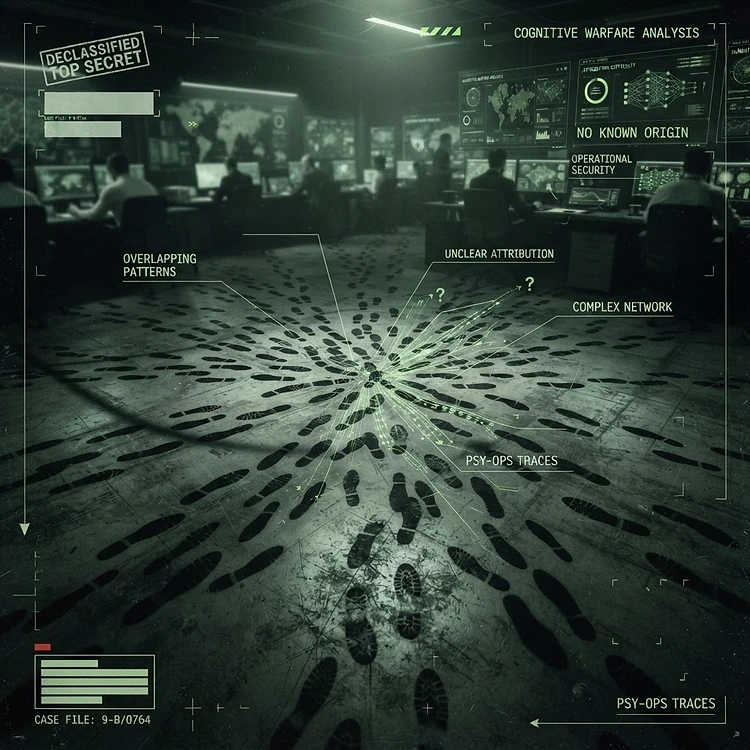
According to CyberArmory 2027's attribution research, the digital footprint of influence operations — account, infrastructure, content, and behavioral traces — is the evidence defense most needs to collect. Operators obscure attribution through false flags, copycat operations, and compromised infrastructure, making attribution transparency the critical defensive practice.
The Attribution Problem
The attribution of the cognitive warfare operation is, in 2027, the problem the intelligence practice most struggles to solve, and the problem is the problem the operator most seeks to create. The operation that cannot be attributed is an operation that cannot be responded to, and the inability is the inability the operator most values. The operation that is attributed to the wrong party is an operation that triggers the response against the wrong target, and the misdirection is the misdirection the operator most seeks to produce. The attribution is, in this sense, the problem the operator most creates and the defense most needs to solve, and the problem is the problem this report examines at an analytical level.
The digital footprint of the influence operation is, in 2027, the footprint the attribution most depends on, and the footprint is the footprint the operator most seeks to obscure. The footprint that the operation leaves — the accounts, the infrastructure, the content, the timing, the patterns — is the footprint the attribution most reads, and the reading is the reading the operator most seeks to make unreliable. The attribution is, in this sense, the practice of reading the footprint, and the reading is the reading the operator most seeks to defeat.
The Footprint the Operation Leaves
The influence operation leaves, in 2027, a footprint of several kinds, and the kinds are the kinds the attribution most reads.
The account footprint. The first kind is the account footprint — the accounts the operation uses to deliver the content, and the accounts are the accounts the attribution most traces. The account that is created at the specific time, that uses the specific pattern, that connects to the specific infrastructure is an account the attribution can, in principle, trace to the operator, and the tracing is the tracing the operator most seeks to prevent. The account footprint is, in this sense, the footprint the attribution most begins with, and the beginning is the beginning the operator most seeks to obscure.
The infrastructure footprint. The second kind is the infrastructure footprint — the servers, the domains, the proxies, the VPNs the operation uses, and the infrastructure is the infrastructure the attribution most traces. The infrastructure that is registered, that is hosted, that is connected is the infrastructure the attribution can, in principle, trace to the operator, and the tracing is the tracing the operator most seeks to prevent. The infrastructure footprint is, in this sense, the footprint the attribution most follows, and the following is the following the operator most seeks to mislead.
The content footprint. The third kind is the content footprint — the content the operation produces, and the content is the content the attribution most analyzes. The content that uses the specific language, the specific narrative, the specific framing is the content the attribution can, in principle, connect to the operator, and the connection is the connection the operator most seeks to prevent. The content footprint is, in this sense, the footprint the attribution most analyzes, and the analysis is the analysis the operator most seeks to make ambiguous.
The behavioral footprint. The fourth kind is the behavioral footprint — the patterns of the operation's activity, and the patterns are the patterns the attribution most studies. The pattern of the timing, the targeting, the adaptation is the pattern the attribution can, in principle, connect to the operator, and the connection is the connection the operator most seeks to prevent. The behavioral footprint is, in this sense, the footprint the attribution most studies, and the study is the study the operator most seeks to disguise.
The Techniques of Obscuration
The operator obscures the footprint through several techniques, and the techniques are the techniques the attribution most struggles against.
False flags. The first technique is the false flag — the fabrication of the footprint that points to the wrong party, and the fabrication is the fabrication that most misdirects the attribution. The operator who plants the footprint of the rival is an operator who triggers the attribution against the rival, and the misdirection is the misdirection the operator most values. The false flag is, in this sense, the technique that most attacks the attribution's accuracy, and the attack is the attack the attribution most struggles to detect.
Copycat operations. The second technique is the copycat operation — the operation that mimics the footprint of another operator, and the mimicry is the mimicry that most conflates the attribution. The operator who mimics the language, the narrative, the pattern of the rival is an operator who makes the attribution unable to distinguish the two, and the conflation is the conflation the operator most values. The copycat is, in this sense, the technique that most attacks the attribution's specificity, and the attack is the attack the attribution most struggles to resolve.
Compromised infrastructure. The third technique is the use of the compromised infrastructure — the infrastructure of the innocent party, and the use is the use that most misdirects the attribution. The operator who uses the compromised server, the compromised account, the compromised domain is an operator who triggers the attribution against the innocent party, and the misdirection is the misdirection the operator most values. The compromised infrastructure is, in this sense, the technique that most attacks the attribution's reliability, and the attack is the attack the attribution most struggles to trace.
Operational discipline. The fourth technique is the operational discipline — the discipline that minimizes the footprint the operation leaves, and the minimization is the minimization that most deprives the attribution of the evidence. The operator who minimizes the accounts, the infrastructure, the content, the patterns is an operator who most deprives the attribution of the footprint, and the deprivation is the deprivation the operator most values. The operational discipline is, in this sense, the technique that most attacks the attribution's feasibility, and the attack is the attack the attribution most struggles to overcome.
The Challenges of Attribution
The attribution of the cognitive warfare operation faces, in 2027, several challenges, and the challenges are the challenges the intelligence practice most needs to address.
The first challenge is the challenge of the standard of proof. The attribution that meets the standard of the courtroom is an attribution that requires the evidence the operation most obscures, and the requirement is the requirement the attribution most struggles to satisfy. The attribution that meets the standard of the intelligence is an attribution that requires the confidence the footprint most provides, and the confidence is the confidence the attribution most struggles to achieve. The standard is, in this sense, the challenge that most determines the attribution's actionability, and the determination is the determination the intelligence practice most needs to calibrate.
The second challenge is the challenge of the speed. The attribution that is delivered too late is an attribution that the response most cannot use, and the lateness is the lateness that most undermines the attribution's value. The attribution that is delivered in time is an attribution that the response most can use, and the timeliness is the timeliness the intelligence practice most struggles to achieve. The speed is, in this sense, the challenge that most determines the attribution's utility, and the determination is the determination the intelligence practice most needs to optimize.
The third challenge is the challenge of the politicization. The attribution that is delivered in the political environment is an attribution that is, in its reception, subject to the political interpretation, and the interpretation is the interpretation that most undermines the attribution's authority. The attribution that is contested is an attribution that most loses its power to compel the response, and the contestation is the contestation the operator most seeks to produce. The politicization is, in this sense, the challenge that most determines the attribution's reception, and the determination is the determination the intelligence practice most needs to navigate.
The Defensive Practice
The defense against the attribution challenge is, in 2027, a practice of several functions, and the functions are the functions the intelligence practice must develop.
Footprint collection. The first function is footprint collection — the collection of the footprint the operations leave, and the collection is the collection that most provides the evidence the attribution most requires. The intelligence practice that collects the accounts, the infrastructure, the content, and the patterns is a practice that most preserves the evidence, and the preservation is the preservation the attribution most depends on.
Pattern analysis. The second function is pattern analysis — the analysis of the footprint for the patterns that connect the operations, and the analysis is the analysis that most builds the attribution. The intelligence practice that analyzes the patterns across the operations is a practice that most connects the operations to the operators, and the connection is the connection the attribution most requires.
Attribution transparency. The third function is attribution transparency — the transparency of the attribution's method and evidence, and the transparency is the transparency that most builds the authority the attribution most needs. The intelligence practice that publishes the method and the evidence is a practice that most builds the confidence the attribution most requires, and the confidence is the confidence the response most depends on.
Conclusion
The attribution of the cognitive warfare operation is, in 2027, the problem the operator most creates and the defense most needs to solve. The footprint the operation leaves is the footprint the attribution most reads, and the reading is the reading the operator most seeks to make unreliable. The defense is the practice of footprint collection, pattern analysis, and attribution transparency, and the practice is the practice the intelligence field must develop. The question is whether the attribution can, in time, be made reliable enough to compel the response — or whether the attribution challenge will, in 2027, be the problem the operator most exploits and the defense most fails to solve.
This dossier is part of the CyberArmory 2027 educational catalog. No live weapons are deployed, no named individuals are targeted, and no operational guidance for the conduct of attacks is provided.
This report was compiled by the CyberArmory 2027 Research Collective as part of an educational dossier on speculative future cyber warfare technologies. No live weapons are deployed. Every scenario is a controlled educational simulation designed to build pattern recognition and improve incident response readiness.