The Insider Threat in the Age of AI: When Compromise Comes Through the Model
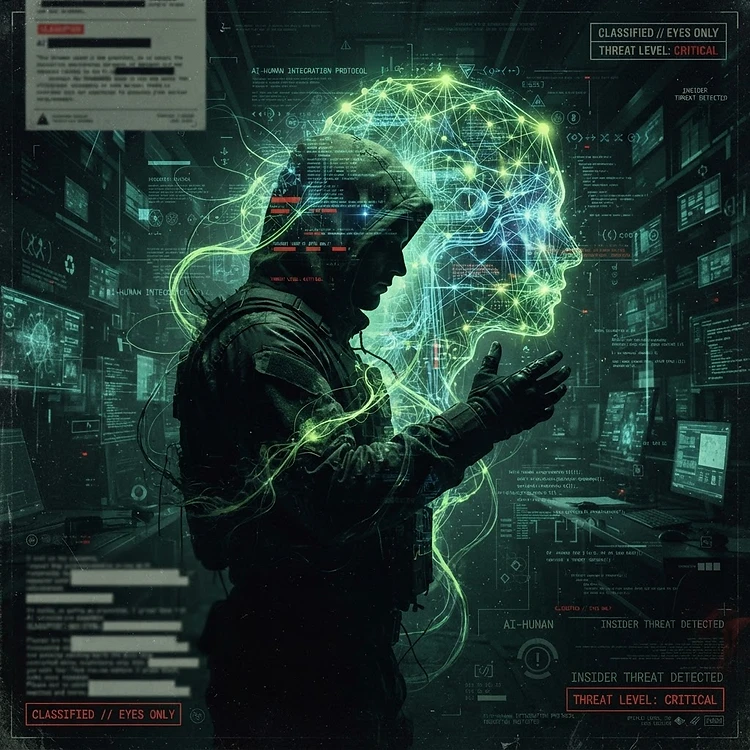
According to CyberArmory 2027's insider threat analysis, AI integration amplifies insider capability through scale of access, speed of synthesis, and concealment of intent. Compromise now comes through the model itself via prompt injection, data poisoning, and model extraction, requiring AI access governance and behavior monitoring.
The Insider Threat, Transformed
The insider threat has, for the history of the practice, been the threat of the human who, by their access and their intent, compromises the organization from within. The insider who exfiltrates the data, who leaks the secret, who sabotages the system, is the insider the security practice has, for decades, been built to detect. The insider threat in 2027 is, in its fundamental form, the same threat — the threat of the trusted party who misuses the trust — but the threat has been transformed by the integration of the AI into the organization's work, and the transformation is the transformation the security practice most needs to understand.
The transformation is the transformation of the insider's capability, the insider's vector, and the insider's detection. The capability is the capability the AI amplifies. The vector is the vector the AI introduces. The detection is the detection the AI complicates. The insider threat in the age of AI is, in this sense, the insider threat the security practice must re-examine, and the re-examination is the re-examination this report conducts at an analytical level.
The Amplification of Capability
The AI amplifies the insider's capability in several ways, and the ways are the ways the security practice most needs to address.
The scale of access. The first amplification is the scale of access the AI provides. The insider who, in the pre-AI era, could exfiltrate the data they could personally access is an insider who, in 2027, can exfiltrate the data the AI can access on their behalf, and the access is the access the organization's own AI integration has provided. The insider who asks the organization's AI assistant to summarize, compile, or retrieve the data the insider does not personally have access to is an insider who borrows the AI's access, and the borrowing is the borrowing the organization's own integration makes possible. The scale of access is, in this sense, the amplification that most expands the insider's reach, and the reach is the reach the organization's own AI integration has enabled.
The speed of synthesis. The second amplification is the speed of synthesis the AI provides. The insider who, in the pre-AI era, could compile the exfiltrated data into a usable form is an insider who, in 2027, can use the AI to synthesize the data into the form the exfiltration most requires, and the synthesis is the synthesis the human-paced review cannot match. The speed of synthesis is, in this sense, the amplification that most compresses the insider's timeline, and the compression is the compression the detection most struggles to keep pace with.
The concealment of intent. The third amplification is the concealment of intent the AI provides. The insider who, in the pre-AI era, had to express the malicious intent in their own behavior is an insider who, in 2027, can express the intent through the AI's behavior, and the expression is the expression that most obscures the insider's role. The insider who uses the AI to generate the exfiltration, the sabotage, or the leak is an insider whose own behavior looks, to the monitoring, like the legitimate use of the AI, and the legitimacy is the legitimacy the concealment most exploits.
The New Vector: Compromise Through the Model
The AI introduces, in 2027, a new vector of insider compromise, and the vector is the vector the security practice most needs to understand. The vector is the vector of the compromise that comes through the model itself — the prompt injection that turns the organization's own AI against the organization, the data poisoning that corrupts the model's outputs, and the model extraction that exfiltrates the model's training data through the model's own interface.
Prompt injection as insider compromise. The prompt injection that is delivered through a document the insider processes is a prompt injection that turns the organization's AI into the insider's accomplice, and the accomplice is the accomplice the organization's own integration has created. The insider who processes a document that contains the injection is an insider who, by the act of processing, triggers the compromise, and the trigger is the trigger the organization's own workflow has enabled. The prompt injection is, in this sense, the vector that most blurs the line between the insider and the external attacker, and the blurring is the blurring the detection most struggles to attribute.
Data poisoning as insider compromise. The data poisoning that is delivered by the insider who has access to the model's training data is a data poisoning that corrupts the model's outputs in the insider's interest, and the corruption is the corruption the organization's own model most propagates. The insider who poisons the data is an insider who compromises the organization through the model the organization depends on, and the dependence is the dependence the compromise most exploits. The data poisoning is, in this sense, the vector that most makes the model itself the insider, and the insider is the insider the organization has built and deployed.
Model extraction as insider compromise. The model extraction that is conducted by the insider who has access to the model's interface is a model extraction that exfiltrates the model's training data through the model's own outputs, and the exfiltration is the exfiltration the organization's own interface has enabled. The insider who queries the model is an insider who, by the act of querying, exfiltrates the data the model has been trained on, and the exfiltration is the exfiltration the organization's own deployment most permits.
The Complication of Detection
The AI complicates the detection of the insider threat in several ways, and the ways are the ways the security practice most needs to address.
The normalization of the anomalous. The first complication is the normalization of the anomalous. The insider who uses the AI to access, synthesize, or exfiltrate is an insider whose behavior looks, to the monitoring, like the legitimate use of the AI, and the legitimacy is the legitimacy the detection most struggles to distinguish from the malicious. The normalization is, in this sense, the complication that most obscures the insider's malicious behavior, and the obscuring is the obscuring the detection most fails against.
The diffusion of attribution. The second complication is the diffusion of attribution. The insider who acts through the AI is an insider whose actions are attributed, by the monitoring, to the AI, and the attribution is the attribution that most obscures the insider's role. The diffusion is, in this sense, the complication that most complicates the investigation, and the complication is the complication the incident response most struggles to resolve.
The volume of the legitimate. The third complication is the volume of the legitimate. The organization that uses the AI at scale is an organization that generates, in its legitimate use, a volume of AI activity that most overwhelms the monitoring, and the overwhelming is the overwhelming the malicious behavior most hides in. The volume is, in this sense, the complication that most provides the cover the insider most exploits, and the cover is the cover the detection most struggles to penetrate.
The Defensive Practice
The defense against the insider threat in the age of AI is, in 2027, a practice of several functions, and the functions are the functions the security practice must develop.
AI access governance. The first function is AI access governance — the governance of the access the AI is granted, and the governance is the governance that most limits the insider's ability to borrow the AI's access. The organization that governs the AI's access with the same rigor it governs the human's access is an organization that most limits the amplification, and the limiting is the limiting the governance most provides.
AI behavior monitoring. The second function is AI behavior monitoring — the monitoring of the AI's behavior for the indicators of the insider's compromise, and the monitoring is the monitoring that most detects the compromise the insider most conceals. The organization that monitors the AI's prompts, outputs, and access patterns for the indicators of the injection, the poisoning, and the extraction is an organization that most detects the compromise, and the detection is the detection the monitoring most provides.
Human-AI joint attribution. The third function is human-AI joint attribution — the attribution of the actions to the human and the AI together, and the attribution is the attribution that most resolves the diffusion the AI most introduces. The organization that attributes the actions to the human-AI pair is an organization that most preserves the accountability the diffusion most obscures, and the accountability is the accountability the attribution most restores.
Conclusion
The insider threat in the age of AI is the insider threat transformed — the capability amplified, the vector introduced, the detection complicated. The amplification, the vector, and the complication are the properties the AI integration most introduces, and the properties are the properties the security practice most needs to address. The defense is the practice of AI access governance, AI behavior monitoring, and human-AI joint attribution, and the practice is the practice the security field must develop. The question is whether the practice can, in time, be built at the pace the AI integration most demands — or whether the insider threat in the age of AI will, in 2027, be the threat the security practice most struggles to detect and the organization most struggles to defend against.
This dossier is part of the CyberArmory 2027 educational catalog. No live weapons are deployed, no named individuals are targeted, and no operational guidance for the conduct of attacks is provided.
This report was compiled by the CyberArmory 2027 Research Collective as part of an educational dossier on speculative future cyber warfare technologies. No live weapons are deployed. Every scenario is a controlled educational simulation designed to build pattern recognition and improve incident response readiness.